
Tag: News Nine

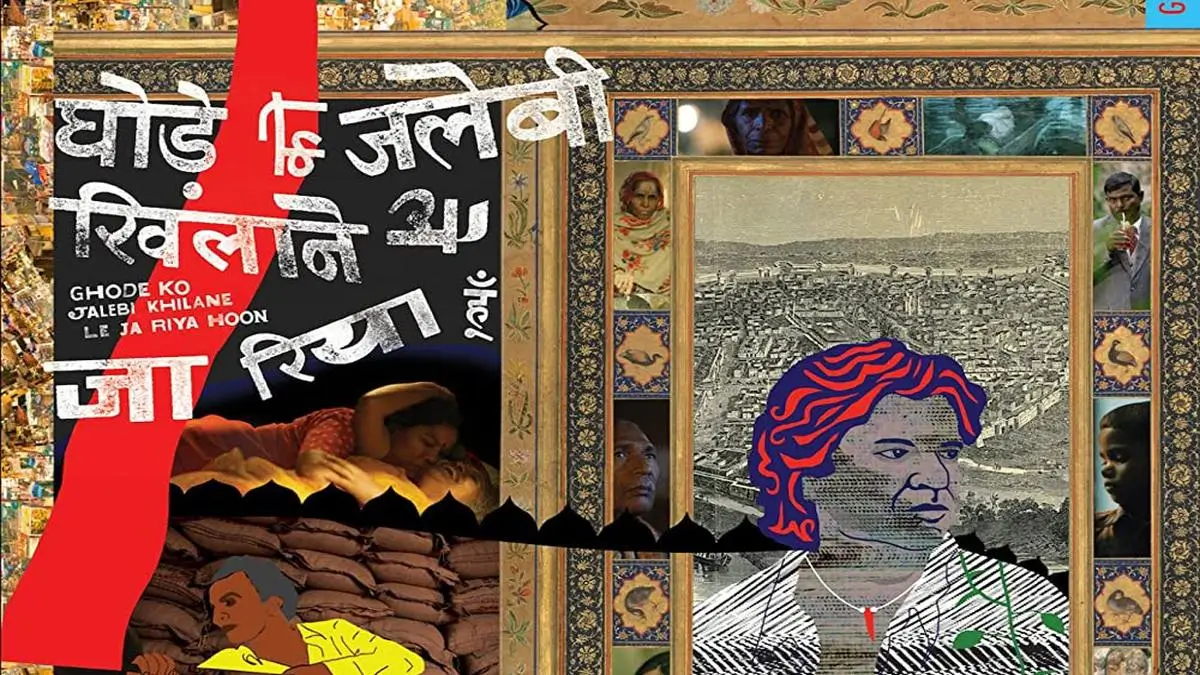
  • Anamika Haksar on Ghode Ko Jalebi Khilane Le Ja Riya Hoon’s 7-Year Journey to Theatre Screens

    Anamika Haksar on Ghode Ko Jalebi Khilane Le Ja Riya Hoon’s 7-Year Journey to Theatre Screens

    This interview was first published in News Nine

    On a heritage walk in Old Delhi, a tourist asks the guide Patru about local folk stories. He stops a passer-by, Savitri, who narrates one: ‘My son used to live with his grandparents. There was a well near the house. He fell in it and died.’ Unimpressed, the tourist wants another folk story, only to hear an even more morbid anecdote.

    This hilarious episode is one of several in Ghode Ko Jalebi Khilane Le Ja Riya Hoon (Taking the Horse to Eat Jalebis), theatre veteran Anamika Haksar’s film debut. The movie uses documentary vignettes, dream sequences and staged scenes to capture the lives of people on the streets of Old Delhi: daily-wage labourers, hawkers and pickpockets, among others. It features four protagonists played by professionals and 350 non-actors living in the locality.

    Ghode Ko… released in theatres on June 10. Syed Saad Ahmed speaks to the director, Anamika Haksar, about the making of the film, its unique structure and the challenges her team faced.

    The film took about seven years to complete. Could you walk us through your journey?

    I started writing a fictional account of three people sitting on a street in Old Delhi, their difficulties and dreams. But I realised that to explore these deeply, I had to get on the road and talk to folks. So, we made a questionnaire asking people about their daily lives, what they are afraid of, what they think about when they wake up, etc. My team members — Lokesh Jain, Sarita Sahi and Chavi Jain — talked to about 70 people over two years. Excerpts from these interviews became the characters’ dialogues.

    Lokesh Jain, who plays the heritage guide Akash Jain, wrote the film’s fictional dialogues. I wanted to capture the richness of tongues in Old Delhi: Hindustani, the street Hindi, Bhojpuri and other languages brought by migrant labourers.

    We shot in 2015-2016 in three schedules: summer, winter and a five-day wrap-up in February 2016. It took five to six months to edit. There were many deliberations with the visual effects producer Soumitra Ranade, production designer Archana Shastri and cinematographer Saumyananda Sahi, about how to represent people’s dreams, both through the camera and VFX. We used folk styles from around India for the animated sequences, which took a long time. Plus, I didn’t have funds.

    There were reports that you sold your house to fund the film.

    No, I didn’t sell my house. I am 63, suffer from arthritis and have a child whose fees I have to pay — so I can’t afford to be on the road. I gave my house to a developer and got some money out of it. I used that, but I also broke fixed deposits, took loans from banks, and asked people and trusts for money, who gave anything from ₹1,000 to ₹5 lakh.

    Did you have to cut corners because of budget constraints?

    Hmm… maybe if I had more money, there wouldn’t have been so much struggle at every stage. After a point, it was too much. It hinders the peace you need to make a film. But I guess fighting challenges also gives you strength.

    The film’s first festival screening was in 2018 and it’s releasing in theatres in 2022. Take us through that journey.

    I wanted the film in cinema halls because I wanted to show it to the people of Old Delhi we worked among. After the premiere at MAMI, the movie travelled to festivals around the globe. It was much celebrated after Sundance.

    In 2020, the film’s release was stalled by the pandemic. So, we sat for two years. OTT platforms didn’t want us because they thought it wouldn’t sell. When COVID-19 eased, I asked my friends for a good distributor. Rajat Kapoor suggested Shiladitya Bora, who has released quite a few indie films no one else would touch. I was also hospitalised due to COVID-19, so that delayed things further.

    How many people were there during the shoot? What kind of problems did you face?

    We usually had 15 crew members, apart from the actors. There were as many as 30 people for some scenes. We had permission for all the locations, but encountered problems. Old Delhi is quite crowded and often, tempers would rise. Suddenly, a group would come and scream, ‘Stop this!’ Some people thought we were from Bombay and had lots of money, which we were supposedly handing out to everyone but them. There are many such stories behind every scene and lots of absurd humour.

    Could you share an incident that was particularly interesting or outlandish?

    I’ll tell you my favourite. We were shooting with some people who had migrated from Vidarbha and lived on the streets near Hanuman Temple. Rahul, the most educated in the group, would explain the scene and read the dialogues to them. One day, he saw a person rummaging through a dustbin, and finding it suspicious, called the police. They discovered that someone had planted a bomb, so Rahul got high security. He was living on the street and had two security guards shadowing him all the time! One day, when he was reading the dialogues, a guard said, ‘Why are you making him do this? He doesn’t know how to deliver dialogues. Let me teach him. I have done an MA from Panjab University.’ So, we gave him the responsibility and he coached Rahul.

    There were funny incidents in the film too.

    I am glad you got the black humour. Some people get it, some don’t, but mostly they do. We had a screening in Brazil, where the audience cracked up even though they were watching it with Portuguese subtitles. They said, ‘This film is about us, about the problems we face in our country. It’s very close to us.’

    The film does not have a plot in the conventional sense. How did you give it a structure?

    Let me tell you another story. I visited a homeless shelter in Karol Bagh. A woman living there was once a cook at a big Bollywood star’s house. After she became old, they abandoned her. Her only asset was a sari and a cage with a white mouse. People’s experiences indicated that anything could happen when you live on the street. Considering this precarity, I didn’t want a set structure for the film.

    When you’re homeless, society does not consider you an entity, you can be shoved around. Anyway, in life, who knows what will happen? I wanted the film’s structure to reflect this quality.

    Did the film change drastically on the edit table compared to how you had envisioned it earlier?

    Definitely! Paresh Kamdar is a fantastic editor and I’m grateful to have him as a guide. I’m a theatre person and wanted to include everything in the film. He’d say, ‘Are you mad? This scene is not important. It’s not theatre.’ I’d start crying: ‘DK bhai will feel bad if his scene is not in the film. How will I show my face to him if we remove it?’ ‘Do you want to make a six-hour-long film?’ Paresh would retort. We used to fight and cry — it was like a battle. Eventually, my only instruction was that the film should not be predictable. The moment we know what’s going to happen, things have to change. He gave the film a shape, but he also used to give up at times and say, ‘I can’t understand a thing!’
  • A Rural Doctor’s Memoir Shows the Way Forward for India’s Healthcare System

    A Rural Doctor’s Memoir Shows the Way Forward for India’s Healthcare System

    An edited version of this review was published in News Nine

    When Dr Kavery Nambisan wrote a letter to Indira Gandhi, little did she expect a reply accusing her of being ‘ungrateful’ and ‘leaving this great country to escape to the West for material gains’. The letter concluded: ‘It appears that you are trying to tell me how to run the country. I do not need advice from people like you. Signed, The Prime Minister of India.’

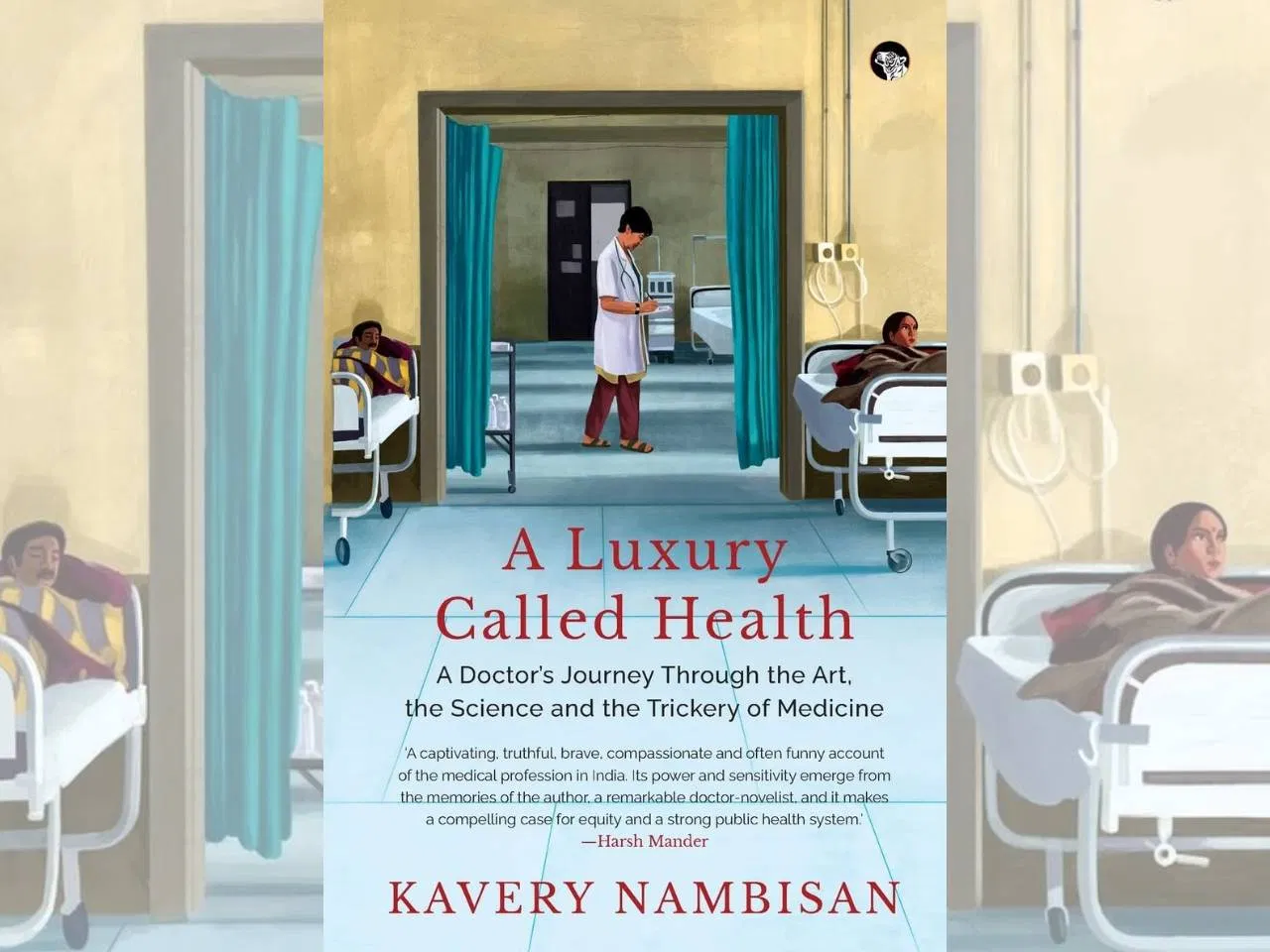
    While Nambisan does not specify what wisdom she had imparted to the Prime Minister, I am glad the churlish response did not stop her from sharing advice and insights. In her first non-fiction book, A Luxury Called Health: A Doctor’s Journey through the Art, the Science and the Trickery of Medicine, Nambisan draws upon her over four decades of medical practice to discuss how healthcare systems can serve people better.

    Her autobiographical account becomes a launch pad to delve into myriad topics, such as the ‘unpredictability and volatile madness of surgery’ in rural India vis-à-vis the UK, the link between barbers and surgeons, and how doctors arrive at crucial medical decisions. She talks about working in different contexts: the UK’s National Health Service, a missionary hospital in Bihar that saw frequent gunshot wounds, and a tea estate hospital where she was preoccupied with administrative duties more than surgeries.

    The issues in her different workplaces reveal the extent of medical malpractices in the country. A hospital in Kerala sold expired drugs. The boss at a corporate hospital in Chennai, whose clientele included celebrities and politicians, micro-managed the doctors and treatment, leading to surgical catastrophes — gangrene and amputation in one case. Such cases were more common among the general-ward patients, who paid less.

    Her wide-ranging experience has equipped her well to suggest solutions. She shares what her ideal rural hospital would look like and champions initiatives such as the Rural India Health Project Hospital in Kodagu, Karnataka, and Delhi’s Rural Medicare Centre. She defends Unbanked Direct Blood Transfusion, that is, blood transfusions after screening for infections, but without banking or storing it. As procuring blood through banks takes time in remote areas, Nambisan estimates she must have performed the illegal practice 5,000 times over her career.

    Her arguments underline the pressing need for a robust public health system. This need has become even starker during the pandemic, which saw hundreds of thousands of ‘preventable’ deaths. Her encounters at a slum in Chennai, whose residents were fed up with local doctors, highlight why nutrition and sanitation should be an integral part of India’s healthcare system. But private hospitals focus on curing diseases rather than preventing them. And yet, they have done little to remedy common scourges like tuberculosis and leprosy. In the book’s final chapter, Nambisan discusses various countries’ healthcare models and their successes and failures to make a persuasive case for the path India should follow.

    Amusing and macabre anecdotes make the book a breezy read despite the weighty, often sombre, subject matter. She writes about an in-demand doctor in Bombay who would flit between four hospitals to perform surgeries. His secret? He had trained his driver as his assistant to suture and bandage incisions! Not only did he have to pay him less than a junior doctor, he also didn’t have to worry about his assistant deserting or competing with him.

    Although Nambisan’s memoir is an illuminating exploration of healthcare, she also confounds. She talks about using homoeopathy and suggesting it to children who suffer from recurrent throat infections. However, unlike in other chapters, she does not back up this espousal with data. Homoeopathy might have worked for her, but that is not evidence of its effectiveness. While alternative medicine systems or informal practitioners might be useful, especially in regions with scant medical facilities, we cannot promote these without rigorous evidence.

    Homoeopathy is unlikely to have adverse effects, but Nambisan makes a more grievous error by advocating ivermectin to cure COVID-19. In an interview, she even alleged that a ‘vaccine lobby’ has suppressed its use. Her contention is dangerous considering how ivermectin became a fad among anti-vaxxers. Besides, touting it as a COVID-19 cure led to a surge in ivermectin overdose cases in the United States.

    Allopathy and the current medical consensus are not beyond criticism. With research, evidence and better technologies, treatments and medicines might change. For millennia, physicians believed that miasma (foul air) spawned diseases. It took a long time for the germ theory of disease to gain acceptance, as Nambisan discusses in a riveting chapter on the history of medicine.

    Thus, the problem is not that her endorsement of homoeopathy and ivermectin challenges medical orthodoxy, but that these are baseless assertions. She writes that ivermectin’s ‘early use has been found to be highly effective in curing 76 per cent of patients with COVID-19’, but I could find no such study. For a book that extensively cites data to make a point, there are no footnotes or references, so it’s hard to verify her claims.

    However, these flaws do not take away from the book’s brilliance. Nambisan’s skilful blending of the personal with the professional reaches its apex in the penultimate chapters, where she recounts her husband Vijay Nambisan’s struggle with cancer. Her reflections on suffering and death contain multitudes: they are heartbreaking yet comforting, dispassionate and moving. And as is the case throughout the book, they provide profound insights about the vocation of healing bodies and saving lives.

  • Thongs, Tushies, and Cleavage Tattoos: ‘Kaanta Laga’ and the Makings of a Millennial Moral Panic

    Thongs, Tushies, and Cleavage Tattoos: ‘Kaanta Laga’ and the Makings of a Millennial Moral Panic

    An edited version of this article was published on News Nine in January 2022.

    A television in the living room brought the world into our lives before we had access to little portals in our hands. Unlike the solitary affair that swiping through a mobile phone is, watching television was usually a communal experience. And that’s why the Kaanta Laga music video, released in 2002, cut deep grooves into my consciousness.

    The remix of a 1972 song from the Bollywood film Samadhi became an obsession because it was so hard to steal a glimpse of. The music video was infamous for scraping the depths of depravity, so we had to change the channel whenever the song’s signature “Aaaaah…everybody now” erupted on screen.

    There were a couple of times I happened to be alone and the video started playing. But the fear of my parents catching me watching “dirty things” and the unimaginable consequences that would follow made me shut it after a handful of seconds.

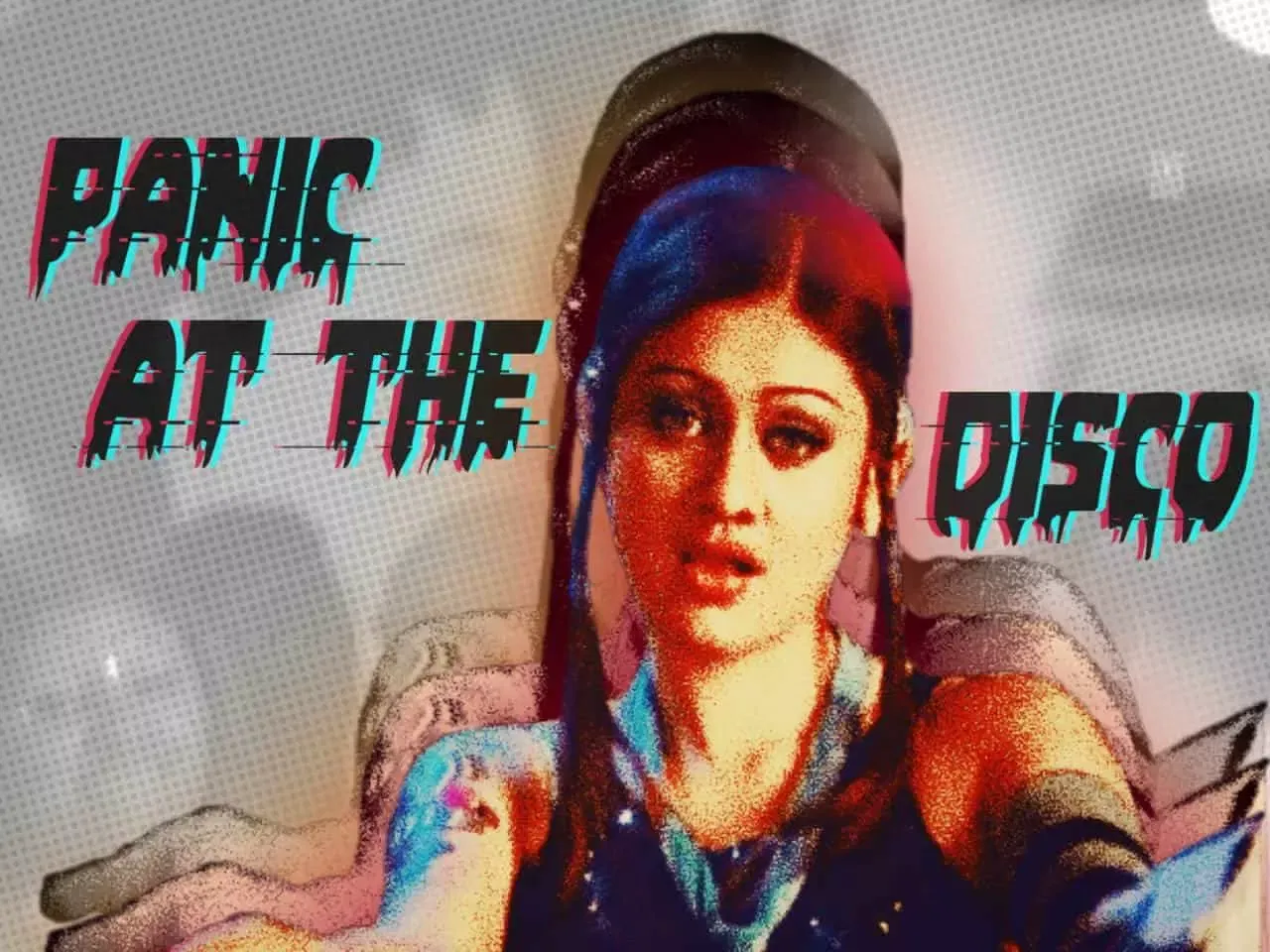
    From those transient viewings, I tried to piece together what was so opprobrious about the video. Was it the cat-paw tattoos astride a clubber’s cleavage? Was it the nude man on a magazine cover? Or was it the blue string-like contraption (‘thong’ infiltrated my vocabulary much later) that defiantly rose above the lead, Shefali Jariwala’s jeans? I would never know, for I never saw the complete video.

    Puberty had still not appeared on the horizon and pornography hadn’t infiltrated my vocabulary. Dial-up internet speeds were useful only for chats, emails and Flash animations, so there was not much I could do about my frothing curiosity.

    As powerful as the mystery regarding the source of moral panic were the rumours that floated in the video’s wake. Jariwala had died because of cancer brought about by the plentiful tattoos on her body, my sister reported. Other versions mentioned the death of another inked woman and some conveniently killed both. We didn’t have WhatsApp then to fuel rumours, but the scanty penetration of the internet also allowed gossip to simmer unverified for years. A couple of years later, Jariwala snuck into the news, but the supposed death of the other woman survived as a cautionary tale about the dangers of tattoos.

    Kaanta Laga dominated conversations for months. Even the Information & Broadcasting Ministry termed it “objectionable” and “indecent” and eventually banned it, though some channels continued screening the video. Ironically, it went on to receive the Best Contemporary Music Award by the government-run Sangeet Natak Akademi, that too the first time the award category was instituted.

    With time, the video retreated from television screens and Jariwala from public memory. But the internet never forgets. And so, two decades later, YouTube’s sneaky algorithm thrust Kaanta Laga into my playlist. It was a precious moment. Finally, as an adult free of parental supervision, I could watch the video in its entirety. And so it began with the familiar exhortation of aah…

    I was appalled — and not because of the purported vulgarity. It was hard to believe that something as innocuous as the video could have provoked a moral emergency. It merely brought to mind some of the highly questionable fashion choices of people in the early aughts (including myself).

    But more comforting than the unravelling of the video’s ‘mystery’ were the comments below. Turns out it was not just my uncool, morally upright circles that propagated rumours — many comments mentioned the cancerous tattoos, and deaths brought on by the purported depravity. Nor was I alone in changing the channel or not being allowed to watch the video. It seems as if the entire nation had suffered that. “Today’s kids will never understand the level of risk in watching this song in our childhood days,” writes YouTube user Ding Dong, to which people chime in with “Omg seriously lol” and “True… ???”.

    The comments under the video were a treasure trove of bizarre trivia. I discovered another rumour — that Jariwala’s brother killed her after the video came out. Others pointed out that the magazine with the nude guy on it, which caused much consternation to the boy she was wooing, was a gay magazine! It also struck me — two decades late — that the thorn and fruit in the song lyrics (Kaanta Laga means a thorn pricked me) were not of the botanical kind.

    The comment I could identify most with was, “Why it was considered vulgar in past? it doesn’t look [so] now!” Why indeed. Sure, that was an era when people “read” porn rather than watched it, but was seeing someone browse a smut rag onscreen so unsettling? The thong then? But Jariwala is rather clad — after all, she’s wearing jeans on top of the thong!

    I got a clue after reading an essay by Imaan Sheikh. The remix videos of the 2000s, she writes, “had an unintentional side-effect: the accidental mainstreaming of women’s independent sexuality, as audiences indulged in videos of women having a damn good time.”

    It struck me that the Kaanta Laga video’s most remarkable aspect is Jariwala’s self-assurance and the gusto with which she revels in her sexuality. This angers her romantic interest. Regardless, she woos him while continuing to defy his wishes. Towards the end, she seems apologetic and sets alight the porn magazine to appease him. However, as she walks out of the club — boy in arms, unburnt magazine tucked in her jeans — it’s obvious she’s anything but.

    Nudity and skin show had been around for decades in Indian cinema, but female sexual assertiveness for its own sake rather than for men’s pleasure? An instance that comes close is Choli ke Peechhe in the film Khalnayak, which also faced puritan wrath. Many writers have pointed out its queer subtext and how it portrayed women as sexual subjects rather than objects. I can’t think of similar precedents on Indian television.

    While Kaanta Laga has shots pandering to the male gaze, it is largely about Jariwala having a great time dancing, flirting and checking out men — in flesh or in an erotic magazine. That perhaps riled the prudish more than the thong, or the nude man.