Tag: Silverscreen India

  • ‘Gamak Ghar’ Review: A Visual Feast Of Loss And Longing

    ‘Gamak Ghar’ Review: A Visual Feast Of Loss And Longing

    An edited version of this article featured in Silverscreen India

    ‘You want to know if there is anything good that can be said about Bihar?’ In Patna, an editor had asked Shiva Naipaul that question, and he answered, ‘The truthful reply is no. I cannot think of a single good thing to say.’

    – A Matter of Rats: A Short Biography of Patna, Amitava Kumar

    While Naipaul’s derision might be at the dire end of the spectrum, critiques of Bihar abound—some deserved, some unfairly reductive. Bollywood films largely depict it as a land of violence, crime and anarchy (for example, Shool, Gangaajal, and Apaharan). More recently, it was a setting for Half Girlfriend’s rags-to-riches protagonist to indulge his philanthropic urges. Most Bhojpuri films feed into stereotypes and perpetuate others with their sexist tropes.

    In this milieu, Achal Mishra’s debut fiction feature Gamak Ghar wrests the narrative to touch upon another aspect of Bihar—emigration. Decades of economic stagnation and social unrest have led to people across classes and castes leaving the state for a better life. According to the 2011 census, 7.5 million people migrated from Bihar to other parts of India, second only to Uttar Pradesh. About half the households in Bihar have at least one migrant. From January-June 2017, Bihar sent more workers to the Gulf than any other Indian state.

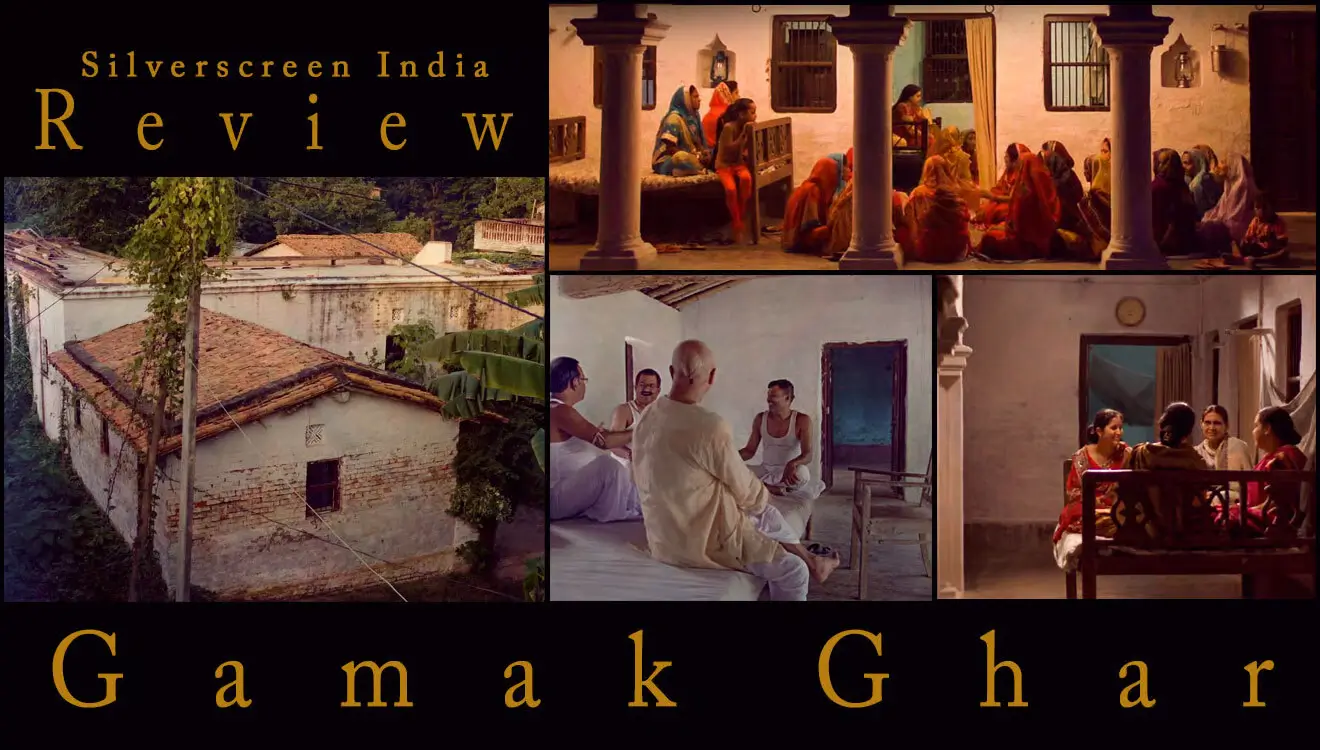
    Gamak Ghar, though, isn’t about migration, even though it is the pivot on which the film unfolds. The movie chronicles a Maithil Brahmin family’s ancestral house and the changes it undergoes over two decades. In 1998, the family comes together during the summer to celebrate the birth of a child and host a feast. They play cards, run errands, banter and watch movies on the VCR.

    In 2010, we see them congregating during the Chhath festival. Times have changed though—the film camera has given way to the DSLR and fritters to Maggi. The house bears signs of disrepair and tensions between family members come to the fore. Conversations seem stilted. Even the jokes are turning sour. Those who have made a life for themselves in Delhi and Darbhanga are prospering, while those in the village are struggling.

    By 2018, just the empty shell of the bungalow’s thriving past remains. With most of the people who made the house a home gone, the inevitable dawns—the old must give way to the new.

    https://www.youtube.com/watch?v=iDUqswof\_J0

    The languor of vacations in the village suffuses the first two parts—hide and seek, plucking mangoes, photography, skimming through memorabilia. The static long shots, often with little action in the frame, echo this torpor. With each passing decade, the aspect ratio widens and the warm tones and fuzzy visuals become colder and starker. The comfort and intimacy of the 4:3 aspect ratio of 1998 is a world apart from the widescreen frame of 2018, whose empty, alienating feel intensifies with the fog shrouding the village. Each part is shot in a different season—summer, autumn and winter. These distinct visual palettes reinforce the transformation the house undergoes.

    The dialogues, in Maithili, seem unscripted—as if we were overhearing a family’s quotidian conversations. Gamak Ghar is one of the handful of films in the language.

    The dialogues, however, are sparse and there isn’t much of a plot. In a sense, the home is the plot and the protagonist of the film. Even the cinematography emphasises the home rather than the characters. The camera frequently dwells on the geography of the house—the brick walls, pillars on the porch, window grills and the tulsi plant in the courtyard. Long and mid shots predominate, with the physical features of the house in the foreground or looming large in the background. There are hardly any close-ups, so we always see the characters embedded in their surroundings.

    Gamak Ghar enchants with its overarching attention to details. From the gleaming white walls of 1998 to the damp and blotches pockmarking it a decade later to the utter dilapidation in 2018, the excellent production design and cinematography make it seem as if the film were actually shot over two decades.

    As someone from Bihar, there was plenty that resonated even though I grew up in a different milieu—a Muslim family in Patna, far from the Mithila village of the film. The sloping roofs with clay tiles on serrated asbestos sheets; the Z-shaped projections on windows; the relatives asking, “Do you recognise me?”; the discovery of my forebears’ hand-written ledger books; and the distant thrum of folk music during Chhath were also part of my childhood. Watching Gamak Ghar was a delicious exercise in nostalgia.

    This nostalgia of the emigrant has lately permeated many works on Bihar. Amitava Kumar talks extensively about his reckoning with the state in Bombay-London-New York, his biography of Patna and several articles. The film Mithila Makhaan features a professional in Toronto who returns to his village in Bihar, only to find it irrevocably changed. A 2014 Bihar Tourism ad and Nitin Chandra’s Chhath music videos harp on traditions. These depict and are aimed at emigrants. There is even a Hindi novel, aptly titled Non-Resident Bihari, about the experiences of Biharis preparing for the civil services in Delhi.

    Delhi-based journalist Chinki Sinha describes this departure and reckoning with the past in an essay in the DailyO: “I left because that was the only thing to do. Everyone left. Growing up we wanted to leave Patna and its limited life, and so we lived in the future for the most part. Patna changed over the last 15 years that I have been away. There are malls and coffee shops, and even a discotheque now. But there’s a city that belongs only to you, and there’s a notebook with memories of those that are no more.”

    Gamak Ghar revels in memories of a home that nurtured generations—until they stopped nurturing it. Its nostalgia, however, is a narrow gaze tinted by the lens of idyllic vacations. Bihar’s feudal society, caste oppression and crumbling infrastructure are beyond its field of view. But these are stories for another film. Hopefully, Gamak Ghar will release the shutter to more movies that present the manifold realities of Bihar.

  • ‘Axone’, a Flavourful Tale of Alienation and Belonging

    ‘Axone’, a Flavourful Tale of Alienation and Belonging

    An edited version of this article featured in Silverscreen India.

    In 2007, Delhi Police published ‘security tips‘ for people from Northeast India residing in the city.

    ‘When in rooms, do as Roman does (sic),’ it declared. Its supposedly well-meaning advice about ‘revealing dresses’ and visiting ‘decent places’ even singled out food: ‘bamboo shoot, axone and other smelly dishes should be prepared without creating ruckus in neighbourhood’.

    In the film Axone, streaming on Netflix, the pungent ingredient made by fermenting soybeans creates more than just a ruckus.

    Set in Delhi’s Humayunpur, where tenants from the Northeast live cheek by jowl with mostly Jat landlords, a group of friends make arrangements for Minam’s (Asenla Jamir) impromptu wedding. They want to surprise her with pork and axone. The only hitch? It smells so strong that they try to pass it off as the odour of a septic tank being repaired. Their landlady (Dolly Ahluwalia) catches them smelly-handed despite her grandson Shiv’s (Rohan Joshi) machinations, forcing them to look for an alternative place to cook.

    As they go about preparing the feast, they face prejudice, taunts, harassment and even violence—all because they look different from the north Indians around them.

    The story also draws on real-life incidents, such as the racially charged murder of a 20-year-old student from Arunachal Pradesh in Delhi in 2014. Axone, however, is far from grim. Its comedic touches evoke the whole spectrum of hilarity—from wry chuckles to uproarious laughter.

    While the quest for axone pork, shot almost like a thriller, propels the plot, there are intricate stories woven around the many characters.

    Chanbi (Lin Laishram) is angry at her boyfriend Bendang (Lanuakum Ao) for not standing up for her when a man sexually harasses and slaps her on the street. The inexplicably tortured Bendang breaks down when he is unable to strum and sing Uthe Sabke Kadam. Zorem (Tenzin Dalha) is initially cagey about helping Minam. Upasana (Sayani Gupta) wants to marry and get ‘settled’, as opposed to the ‘career-oriented’ Chanbi. These seemingly random plot points come together in unexpected ways towards the end of the film, which makes the narrative even more engaging.

    Considering that the story unfolds over a single day, it must have been a task to ensure visual continuity in a crowded, cramped place like Humayunpur.

    But cinematographer Parasher Baruah has strikingly rendered the locality’s warren-like lanes and poky houses in a widescreen format.

    It would have been easy to let the film derive flavour from a marinade of stereotypes, which it partially does.

    The north Indian characters are not as fleshed out as those from the Northeast and it often relies on tired tropes, such as the horny Delhi boy. But director and writer Nicholas Kharkongor also subvert these pigeonholes.

    They are many layers to the characters’ personalities, which unfold as the film progresses. Even among the outsiders, there is an outlier—the Nepali Upasana, who, as Shiv declares, is not ‘fully Northeastern’. There are plenty of racists in the neighbourhood, but there are also nice, helpful people. And often, both turn out to be the same.

    Axone has more diversity in one frame than many Indian films have in their entire runtime.

    In the apartment where the protagonists live, the other tenants are Africans and a presumably single Bengali mother and her daughter. The protagonists seek help from Martha, who has married a Sikh man from the neighbourhood and has a multiethnic son. In an industry that reduces entire communities to stock characters, their inclusion without the accompanying clichés is refreshing.

    One thing, however, stands out: the film seemingly hundreds of languages, tribes, geographies and cuisines into a single identity—’Northeastern’—that has more to do with the dimensions of one’s eyes than culture.

    The film doesn’t tell us that axone is a Naga ingredient. The ethnic origins of most characters are rarely apparent, though one guesses Zorem is Mizo because he has a casserole with ‘Made in Mizoram’ etched on it. Some might see this as Axone portraying ‘Northeastern’ people through the homogenising lens of their racist neighbours. But considering how the film seamlessly incorporates diverse languages (around 15, according to the director), songs, and cultural references, it comes across more as an unapologetic assertion of identity. ‘This is who we are and how we live. If you don’t know what axone is, that is your ignorance. Our culture needs no footnotes,’ it seems to say.

    In this respect, the movie is an unprecedented achievement. But as the first ‘mainstream Hindi’ film (it is produced by Yoodlee Films, a division of the entertainment behemoth Saregama) about people from the Northeast, mostly played by characters from the region, it bears the burden of appropriate representation.

    Many, including Nepalis, have lauded Sayani Gupta for getting the accent on point, while others have criticised the casting of a Bengali actor for the role despite her endearing performance. She might have been cast in the film perhaps because she is a known Bollywood face, but one could conjecture that casting her also establishes her character as an outlier within the group.

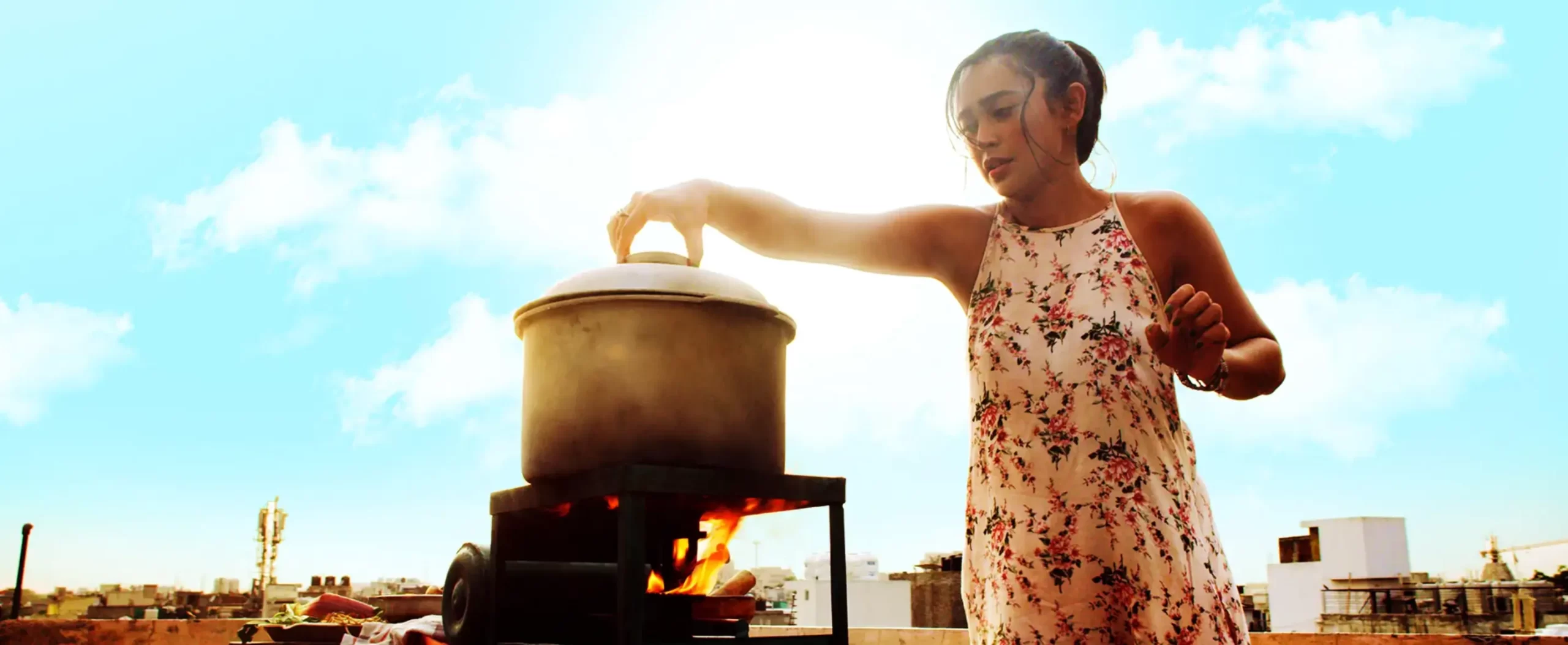
    A woman is putting something in a large cookware. She looks worried and is framed against a blue sky with clouds.
    Sayani Gupta plays the Nepali character Upasana in Axone

    Tenzin, who plays Zorem, is Tibetan. If it is acceptable for him to essay a Mizo shopkeeper, should it not be so for a Bengali actor playing a Nepali character? If one thinks Tenzin is apt for the role because of how he looks, is one not responsible for the same elision of identities that the film’s racist characters do?

    Axone also echoes the debates on cultural clashes and integration happening around the world.

    These sometimes put the onus on the oppressed rather than the oppressor. For instance, Chanbi reprimands Bendang for not ‘making a single friend from here’. Martha responds to Chanbi’s, ‘We have the right to cook our food’ with ‘And they have a right to not suffer the smell of our food. Is their right right or is your right right?’ Are they being apologists for prejudice or do they have a point?

    The film intrigues with the problems it poses, but does not give definitive answers—viewers have to tease these out for themselves.

    And with its hearty humour, poignant moments, and multiplicity of perspectives that shun what Chimamanda Ngozi Adichie calls “the danger of a single story”, it is a rewarding task indeed.

    In Axone, we realise what Indian cinema has lost by ignoring the stories of Chanbi and Bendang, and talented actors like Lin Laishram and Merenla Imsong. Hopefully, it will open the ventilation hatch to films about tungtap, rawtuai bai and yongchak singju. And instead of complaining, people might relish these. Perhaps, that is already happening to some extent. Racism remains a problem across the country, but Humayunpur today has more restaurants from the Northeast than from any other part of India, packed with as many people from outside the region as within. And that ‘smelly’ axone? Nothing tastes better than a hunk of meat oozing its pungent goodness and the fiery bite of king chilli.

  • ‘Taraash’, a Fascinating Documentary About a Farmer-Filmmaker

    ‘Taraash’, a Fascinating Documentary About a Farmer-Filmmaker

    An edited version of this article featured in Silverscreen India.

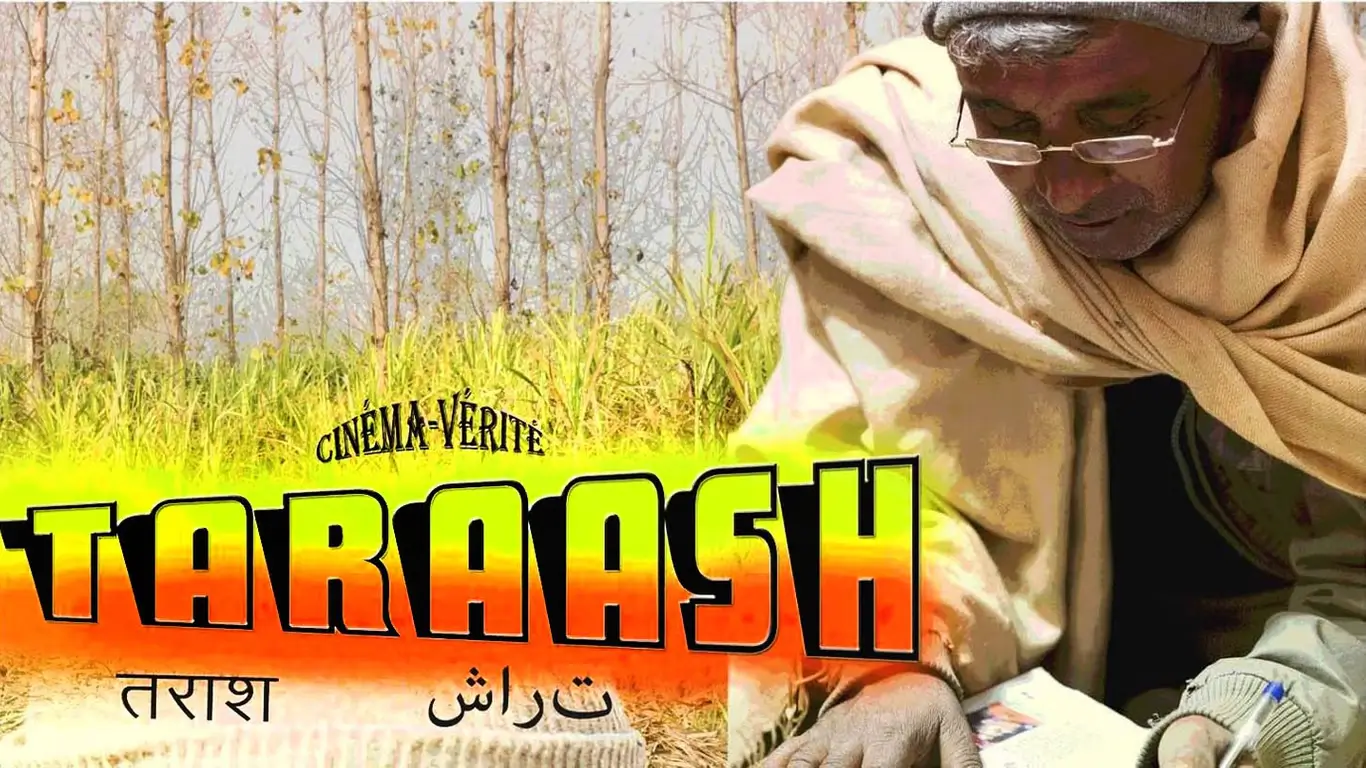
    ‘You’re overacting. Follow my instructions.’ A director telling his actor to shun melodrama might seem commonplace, but Kunwar Pal Singh is a rather unusual filmmaker. In his fifties, the Dalit farmer in Raipur Sadat, a village in Bijnor district, is directing his first film, Maa (Mother). The 13-minute short about the pain of losing one’s mother becomes even more intriguing when you find out that is that it is nestled within a larger documentary, Taraash (2017).

    Kunwar had always wanted to be a Bollywood director and work with his muse, the actress Sridevi, but his modest means and familial responsibilities held him back. It however, didn’t stop the father of six kids from writing six feature-length scripts and many short stories. For decades, people found his passion amusing or downright crazy—even his wife hadn’t read his stories. In 2017, however, his wish finally materialised after a chance encounter with Ishan Siddiqui, then a 20-year-old media student at University of Leeds.

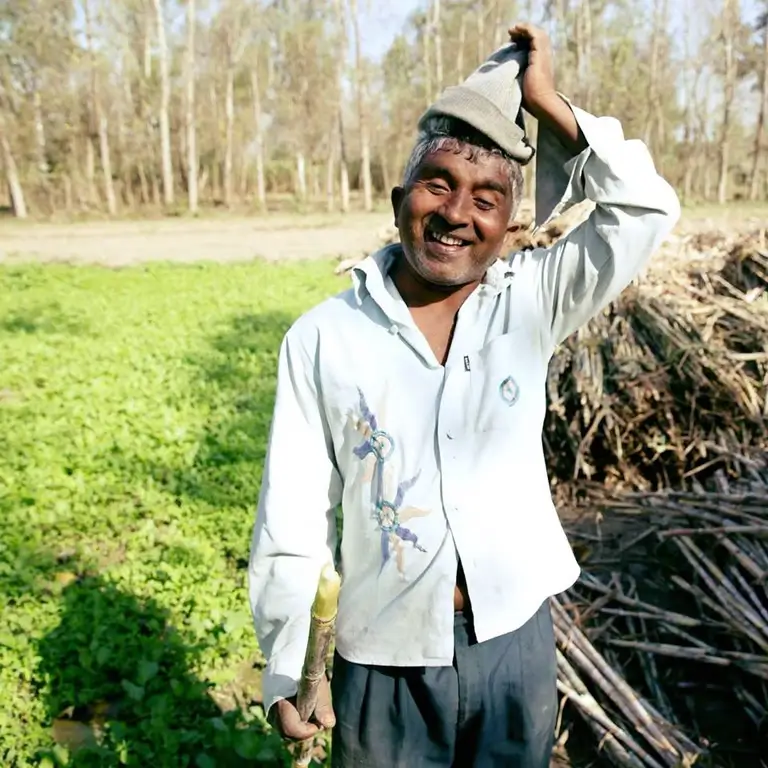
    Kunwar Pal Singh, the farmer who became a filmmaker

    “I was visiting my family in Nagina, my ancestral village,” says Ishan. “I heard about a man in the neighbouring village who wanted to meet me after he found out that I was studying film. As soon as we met, he asked me if I knew any big directors in Bollywood and said, ‘You just take me along, I’ll do the talking…they will love my scripts.’ His determination and confidence inspired me to explore his extraordinary story.”

    Ishan helped Kunwar make Maa and chronicled the collaboration in his 20-minute film Taraash. “I polished his script and adapted it to a short film as Kunwar mainly writes feature-length scripts. I also shared my creative inputs on Maa. During the shoot, he would direct the actors and we would go through the rushes at the end of the day.” While the interviewees and actors in the film were largely locals, he cast three professional actors from Delhi as Maa’s protagonists. The result is a crisp metanarrative weaving fiction and non-fiction that revels in the art and effort of making a film.

    While the crew for both films is the same, the visualisation is different—in Maa, the aspect ratio is wider, the colours starker and the background score more pervasive. Despite the different treatment of the ‘fictional’ and the ‘documentary’, Taraash suddenly intercuts between the two—the fictional mis-en-scene often gives way to the behind the scenes, with the crew, camera and a crowd of onlookers visible in the frame.

    However, it is more than just a film of the ‘making of’ genre. Ishan not only shoots Kunwar shooting Maa, but also Kunwar and the people in the village watching Maa and their reaction to the movie. Jean Rouch pioneered this cinema vérité technique in Chronicle of a Summer (1961). More recently, in The Act of Killing (2012), director Joshua Oppenheimer asked some perpetrators of the 1965-66 anti-Communist massacres in Indonesia to recreate the murders on film and documented their reactions to the videos they shot.

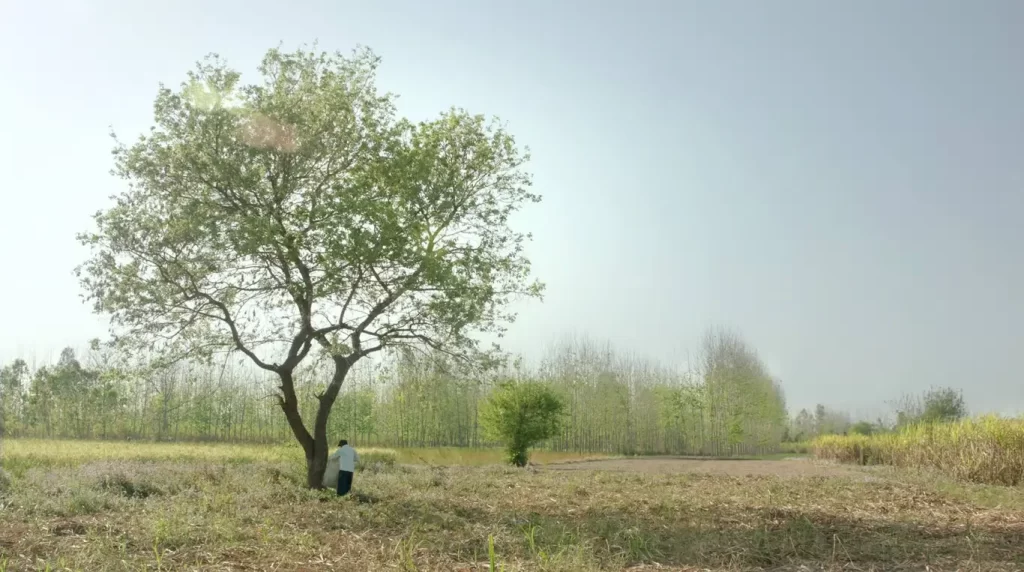
    Raipur Sadat, the village in Bijnor where Kunwar Pal Singh lives

    Ishan acknowledges these directors’ influence: “They taught me the essence of non-fiction filmmaking through collaboration with subjects rather than intervention. I gravitate towards cinema vérité as I enjoy collaboration. As opposed to the ‘fly on the wall’ format [where the crew shoots subjects with minimum interference], I love getting into the thick of things. I also want actors and interviewees to contribute their ideas. For instance, while speaking to Kunwar about Maa, I realised the story was more personal than it initially seemed. I felt like he was using the film to express his feelings towards his mother. So, I wanted him to live his fantasy and share his truth the way he wanted. Sometimes, something as fake as fiction can bring out the true character of a person.”

    Kunwar’s character is what makes the film exceptionally delightful. His earnestness and passion for storytelling suffuses every scene. Despite his age and financial constraints, he has a childlike playfulness. “I can write a story instantly. If you want, I can make one on your cameraman,” he declares to Ishan. “I will set it in London and Delhi…shall I show some romance here or there?” he adds with an impish smile.

    Kunwar is happy with his directorial venture, but he wants more. “If we extend this, it will look amazing,” he says as he watches Maa. Ishan too would have liked Taraash to be feature length, but as a student film, there were many constraints. “As Raipur Sadat is a place with religious significant [the Najaf-e-Hind shrine is nearby], it was difficult to get the permission to shoot and organise screenings. After the local police stopped us from filming, I, along with my cousins, went to the District Magistrate and Senior Superintendent of Police and sought their support,” says Ishan. “The core crew spoke only English, so the Indian crew had to help translate and liaise. Crowd control was also a challenge, but we had the support of village residents and my family members. They helped manage onlookers and avoid chaos.” Taraash was shot over two-and-a-half weeks and funded with a Kickstarter campaign that garnered slightly more than its goal of £4,000 with 66 backers.

    Towards the end of the film, Kunwar says, “As long as I breathe, I will keep writing. This is my dream. One day, I will find a way.” As his passion lights up the screen, one can’t help but wonder how many more Kunwars must be cultivating films in their imaginations and screenplays in their tattered notebooks.

    Taraash was shortlisted for LongShots, BBC’s first online film festival, in 2020.