Tag: Hindustan Times

  • HT Reviewer Syed Saad Ahmed Picks His Favourite Read of 2025

    HT Reviewer Syed Saad Ahmed Picks His Favourite Read of 2025

    This piece was published in Hindustan Times

    I had grown up thinking Luddite was a bad word — someone afraid of or resistant to new technologies. Brian Merchant’s Blood in the Machine: The Origins of the Rebellion Against Big Tech helped me dispel my ignorance.

    As the Industrial Revolution gained hold, textile workers in England in the early 19th century broke looms in protest and threatened factory owners. However, their fight was not against technology. Rather, it was against the mill owners who used mechanisation to wrest a greater share of profits, leaving labourers with less pay even as their workload increased and working conditions worsened.

    So, instead of the irrational, violent people they are made out to be, they were crusaders for a fairer world. They fought with whatever means they had, but the political and economic system was stacked against them. The government sided with factory owners, ruthlessly crushing dissent and punishing machine-breaking with death.

    The Luddites might have ostensibly failed, but their legacy lives on. Subsequent labour movements have won us rights we take for granted today: two-day weekends, 8-hour workdays, and annual vacations. Yet, the misrepresentation of Luddites has endured for more than two centuries in popular culture. Scholars, such as Eric Hobsbawm, have done more justice to their legacy. Merchant goes a step further with his book by showing how workers today face the same threats the Luddites did in 19th-century England. Again, the problem is not technology, but how those with power and wealth are using it.

    The tech world touts automation and artificial intelligence as miracle workers that will usher in a gleaming new world. They add that millions might lose jobs in the process, but that is the nature of progress — you win some, you lose some. However, this widespread unemployment was the utopia that the economist Robert Maynard Keynes once dreamt of. A century ago, he speculated that by 2030, people would only have to work 15 hours a week due to rapid technological advancements.

    And yet, working hours have increased for most despite mechanisation and dramatic productivity gains. Billionaires champion 70-hour workweeks, even though research shows that four-day weeks could be equally, if not more, efficient.

    So, the problem is not that an AI will take our jobs, but that the person who supposedly owns it will pocket our wages. I use the term supposedly because the artists whose works are fodder for generative AI, the data workers who train machines, and the communities whose water and electricity run data centres are its unacknowledged co-creators.

    Technology is not an inevitability that unfolds independently of society. We can decide what to create and how to use it. Merchant’s book brilliantly shows why we should all be Luddites to build a better world.

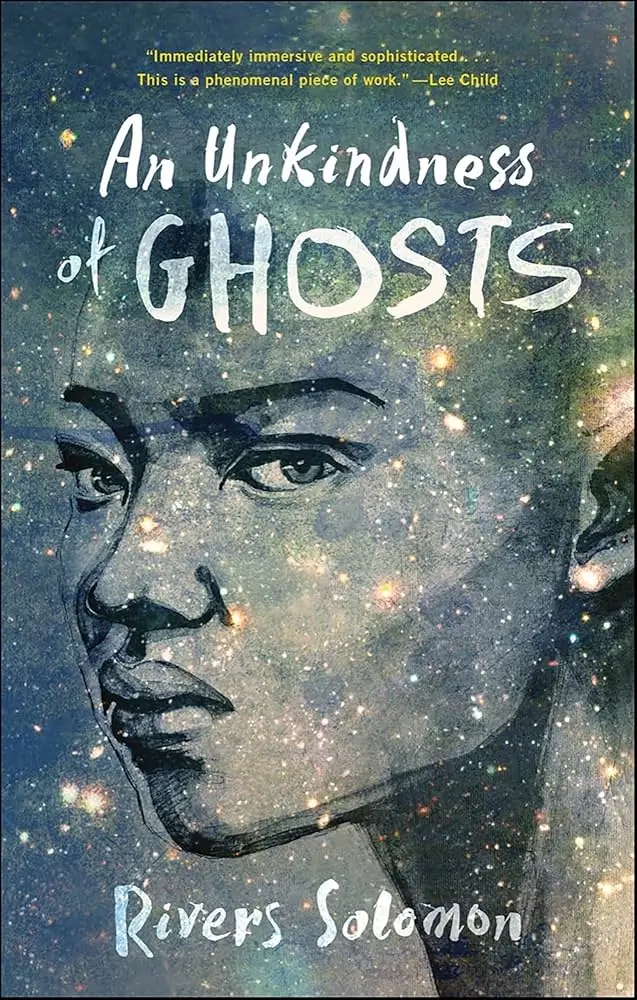
  • Book Review: An Unkindness of Ghosts By Rivers Solomon

    Book Review: An Unkindness of Ghosts By Rivers Solomon

    An edited version of this review was published in Hindustan Times

    Super, a 2010 Kannada film, imagines a strange but apt utopia. In its make-believe world, India has become a superpower in 2030. Indians are prosperous and have “White servants”, while the latter do all the menial jobs and beg on the streets. Its imagination is so limited that it cannot even imagine a utopia without poverty and discrimination. Today, as blundering billionaires seek to establish utopias on Mars, one can only wonder what dystopia it would entail for the rest of us.  

    Rivers Solomon imagines one such world built on the back of a dystopia in An Unkindness of Ghosts. In the novel, humanity — or what is left of it — has been hurtling through space in the ship Matilda for over 300 years. They had to leave their former abode, the Great Lifehouse, after an unexplained catastrophe, but their purported destination, the Promised Land, seems increasingly elusive. 

    Matilda holds tens of thousands of people organised in alphabetical decks. The lighter-skinned live in the upper decks, where they luxuriate in wildlife sanctuaries, lakes, beaches, and sports fields. The darker-skinned underclass in the lower decks have to bear constant abuse, violence, and surveillance by guards. There are nightly headcounts, missing which leads to dire punishments. 

    The protagonist, Aster, is a resident of Q deck and thus, low in the pecking order. Her mother, Lune, mysteriously disappeared when she was young. The journals, notes, and sketches she left behind seem like “eccentric ramblings” to Aster, who suspects she might have had early-onset dementia. Her friend and bunkmate, Giselle, however, has a different explanation. 

    Aster assists Theo, the ship’s Surgeon General, who has trained her in medicine. For many in the lower decks, Aster’s is the only medical care they can access. Her services include abortions for those in the lower decks who become pregnant after rapes by upper-deck men. She also has a secret garden and laboratory, where she cultivates plants and synthesises medicines. 

    The worldbuilding in the novel focuses more on social relations rather than technological advancements. Solomon’s stratified society has many analogues with slavery in the United States. There are occasional forays into scientific curiosities and unfamiliar technologies, but the author glosses over them quickly. There are no elaborate explanations for how a spaceship with tens of thousands of people has functioned for centuries, why life on the Great Lifehouse collapsed, or where exactly they are headed. It seems as ad hoc as our era’s billionaire space race and dreams of colonising Mars. 

    Instead, cruelty and oppression — and the resistance against it, the compassion despite it — animate Matilda’s make-believe world. By focusing on the misfits in it, Solomon further lays bare its stratified and regimented nature that everyone is subject to. 

    Aster takes things too literally and consequently, has trouble understanding what people want to say. She is also queer: “a boy and a girl and a witch all wrapped into one very strange, flimsy, indecisive body”. 

    Her friends, Theo and Giselle, also do not conform to the ship’s strict codes. Aster describes Theo as an “otherling” and “gender malcontent”. He is part of the upper decks and close to the Sovereign (“the Heavens’ chosen ruler”) despite his questionable background. However, his sympathies lie with Aster and her ilk. The powerful in Matilda use religion to justify the worst abuses, but Theo is deeply religious and we often find him praying. 

    Giselle frequently disappears and breaks the rules, suffering brutal punishments. She is unable to come to terms with the world around her and becomes increasingly disturbed. It is these characters and their interpersonal relationships that make the novel compelling. 

    Solomon plunges the reader into this unfamiliar world; there is little by way of explanation. As a result, I felt adrift in the beginning. However, I was soon immersed in the joy of discovery. The reader gradually learns about Matilda as the novel’s protagonists uncover its secrets.

    We see the characters at a time when blackouts have become common on the ship, leaving lower-deck residents to contend with frigid temperatures. Some even suffer from frostbite-induced gangrene, requiring amputations. Lune used to work as a mechanic on the ‘miniature star’ that provided power to Matilda. Aster feels that the blackouts’ timing aligns too neatly with a mysterious illness for it to be a mere coincidence.  

    Towards the end though, the narrative changes its cadence. Many momentous things happen in quick succession and the intricate plotting gives way to abrupt resolutions. It also relies on the trope of a heroic individual almost single-handedly changing things. As a result, the ending feels a bit contrived, though satisfying nonetheless. It is heartening to see a character one has been rooting for realise the unimaginable in a world skewed against her.

    I have rarely encountered characters like Aster in fiction. Her neurodivergence is not a plot point, but an intrinsic part of who she is. In fact, the novel does not even use the term to describe her — rather, the author makes it evident from plentiful clues tossed into the narrative. We see the world through Aster’s lens and as Solomon puts it, she sees the world “sideways”.

    However, not all characters are as deftly delineated. The new Sovereign’s hate for Aster seems irrational at times. There are clues though: the Sovereign, obsessed with Theo, is jealous of the close relationship he shares with Aster. He also cannot stand her defiance. While these do not seem motivation enough for someone as powerful as him, one could argue that there are multiple real-life instances of autocrats obsessing over trifling matters.  

    Today, across countries, despots are making arbitrary decisions with far-reaching ramifications for people who have no stake in them. An Unkindness of Ghosts shows how resistance against their unbridled power can take many forms — sometimes bloody, sometimes with heartbreaking consequences, but also, often joyful.

  • Interview: Esther Duflo and Cheyenne Olivier on Their Book Poor Economics for Kids

    Interview: Esther Duflo and Cheyenne Olivier on Their Book Poor Economics for Kids

    An edited version of this interview was published in Hindustan Times

    In 2011, the Nobel Prize-winning economist Esther Duflo wrote the book Poor Economics: A Radical Rethinking of the Way to Fight Global Poverty with her husband Abhijit Banerjee. It upended assumptions about the causes of poverty and how we can end it by parsing through evidence from the ground and applying the research method whose use they pioneered in development economics.

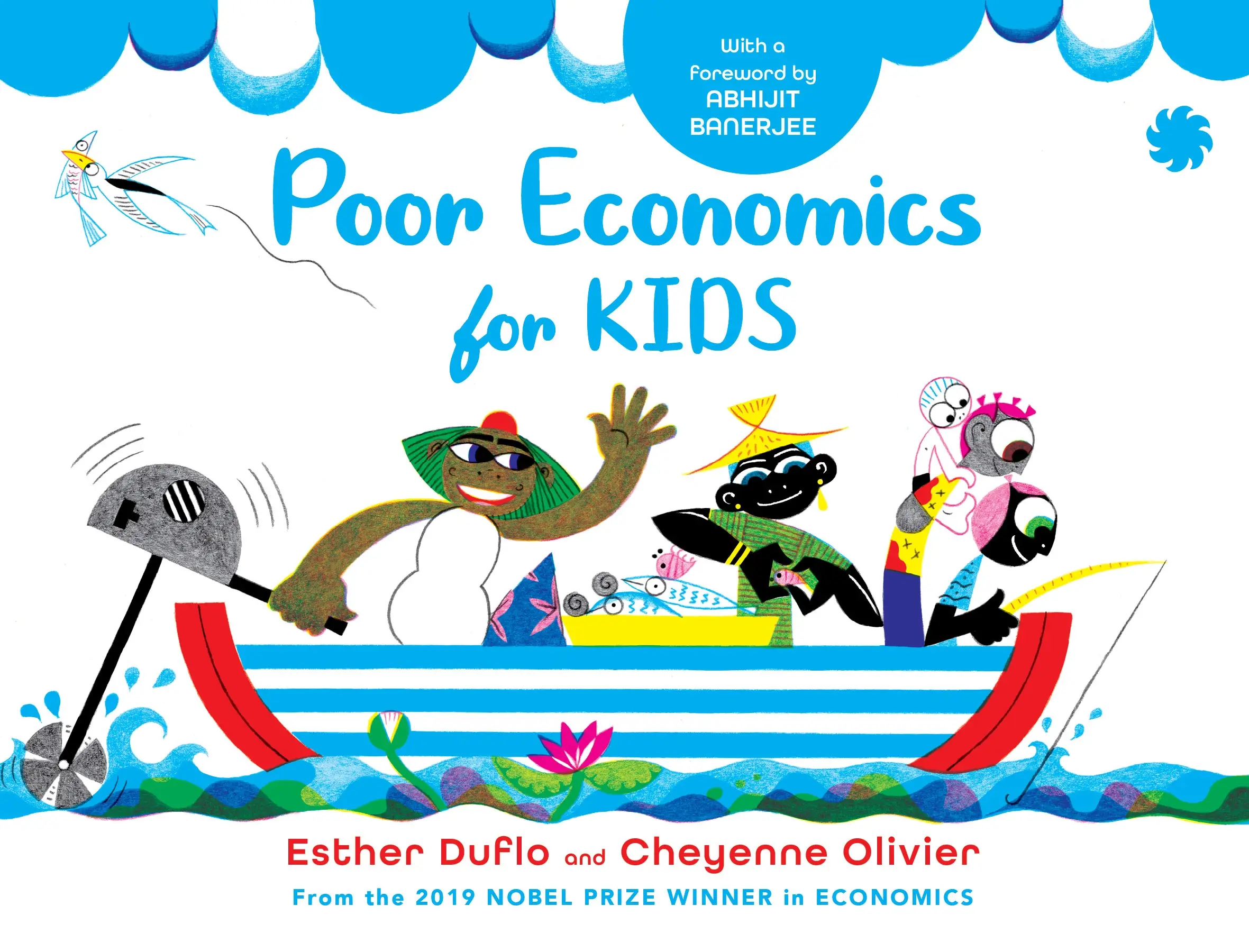
    Duflo has now made her work accessible to younger readers through the picture book Poor Economics for Kids, co-authored with the illustrator Cheyenne Olivier. In an interview over Zoom, Duflo and Olivier talk about collaborating on the book, talking to children about difficult topics, and the challenges and joys of creating the stories.

    Poor Economics draws on years of your work and multiple research studies. How did you think of publishing it as a children’s book?

    Esther Duflo (ED): I had always wanted to publish a children’s book. Children’s literature is important because what you read as a child has a formative impact on your life. We need books on poverty for children because there aren’t many.

    After we finished Poor Economics, we realised that readers were particularly sensitive to the stories of people in the book. It was a powerful way to communicate concepts that are harder to convey through studies or chunks of text. Each story makes a particular point. And with fiction, we could synthesise the lives of the many, many people we had met over the years into fictional characters.

    Poor Economics for Kids is both fiction and non-fiction. It follows the codes of fiction and has a story with a beginning and an end. But everything that happens to the characters can happen to someone in real life.

    Do you also talk about your work and topics such as poverty and inequality with your children? Did their responses play a role in shaping this book?

    Cheyenne Olivier (CO): I don’t have children, but Esther’s children were involved in shaping this book. One of the reasons why Esther and I ended up working together is that I had lived with her for some time. In some sense, this is also how the book started. I learnt about Esther and Abhijit’s research much before thinking about doing a picture book together. And she also had the time to see my illustrations.

    The stories and the way we treat the child characters are based on our interactions with children. And Esther’s children had a fair amount of ideas.

    ED: People always make fun of me — that I get interested in doing things around children the same age as mine. When my first child was born, I got interested in infant cognition. When she was 5–6, I started thinking about this book and when she was seven, we wrote it. She was involved in it and discussed it with us. Now that my kids are 10 and 12, I am interested in middle-school mathematics. What happens to my children is the broader context to a lot of my work.

    In Abhijit Banerjee’s foreword to the book, he says that the stories’ characters live in a village that could be in India, Kenya, Vietnam, or elsewhere. Given that you didn’t want to pin down the geography, how was the process of visualising the book?

    CO: This was one of Esther’s first requirements when she proposed this series. Her work happens in many nations around the world and she didn’t want the book to be linked to a particular country, ethnic group, or culture.

    As an illustrator, that creates a huge challenge because you depend on visual references to depict backgrounds, characters, choose their skin colour, etc. So, I had to take a different path. My style, which is geometric and plays with lines, shapes, colours, and basic visual elements, allowed me to create the imaginary world in the series. Everything is built around a limited set of shapes and colours that I mix and match so that it becomes a coherent universe, but you can’t pin it down.

    But I had to draw floors, houses, clothes, etc, so I still needed references. Esther pointed me to the website Dollar Street, which has photographic records of how people live around the world based on their income. I used this database to pick different visual aspects, such as the shape of a pot and patterns on the floor, and combined them.

    Did you also take inspiration from artworks and other books while developing the visual style for this series?

    CO: I’m very much influenced by artists’ books for children, especially Russian experiments of the 1920s. They are geometric, on the verge of abstraction. People tell me that my drawings sometimes echo art from a certain period in Bengal — those were also influenced by the communist aesthetic.

    Esther, you mentioned that you had had the idea for the book for a long time and Cheyenne, you said you were living together. What was the process of collaboration on the book like?

    ED: From the get-go, I envisioned this as a series of books. In English, it is published as one book with distinct stories. They revolve around topics from Poor Economics. While they follow the book’s structure, they can be read in any order.

    I’ve had the stories — what happens in them, what the characters do — in my system for a long time. I started by conceptualising the narrative as pages of text. Cheyenne and I discussed the text and transformed it into a 32-page storyboard that depicts what happens in each frame. She also flagged issues with the stories, such as logical incoherences, too much happening, things that are too brief to make sense, etc. She then created images as per the storyboard. I would review these and provide feedback, such as this person cannot possibly be doing that or that doesn’t correspond to people’s lived experiences. Then, she made the final drawings. It was extraordinarily cooperative. We were often literally in the same room.

    Eventually, our French editor, Céline Ottenwaelter, also joined this dance. She has extensive experience working with children and on children’s literature, and she contributed a lot.

    So, it’s not as if I wrote the story, shipped it to Cheyenne to illustrate, and then packed it into a book. It was a thoroughly collaborative project!

    CO: It was interesting because I realised I had many prejudices: visual and otherwise. Even though I had read Poor Economics, I inadvertently made mistakes because they added dramatic flair. I felt it would be more interesting if a kid had to travel for a long time to reach school rather than go to the nearest village. But in reality, that’s not the case anymore.

    So, it was nice to have my ideas refined and get the opportunity to do things differently. Sometimes, you can jump straight to the point you want to make, but is that the most important thing in a story? At times, we have to focus on the aspects that make the characters appealing, such as, say, the relationship between a mother and a child.

    When you have 32 pages to develop a story, you could make a point on each page, but you also need to give the reader a break and allow the characters to go about their daily life. There is an idea that poverty is a relentless series of dramatic events or heroic fights without joy. But that is not the case. So, there are pages in the book where children just play together because that’s what children do.

    Developing a series was helpful in this regard. It allowed us to explore different parts of the village and see the characters evolve. The teacher is perhaps not a positive character initially. She’s angry and frightened in the first story, but helps the kids throughout the next story.

    There are close to 50 characters, many of whom recur over the 10 tales. We fleshed them out in each story while maintaining continuity with earlier ones. This was important because in Indian languages and French, we published each story as a separate book, but we didn’t want kids to have to buy the whole series to be able to follow them.

    What do you think is the right way of introducing children to concepts such as poverty, inequality, and environmental crises? It could lead to anxiety and a sense of doom, but it could also motivate actions to change the status quo. What has your experience been in this regard?

    ED: That’s a good question for Cheyenne because she’s conducting academic research on how to represent poverty in children’s literature.

    CO: I’ve been doing workshops with kids. They are drawn to characters as characters, not as poor characters. If they identify with a character, they can think about the issues the character might be facing.

    In a workshop with migrant children, the story in the series about migration helped them talk about their journey to France. It was a good way to initiate a dialogue, though you don’t jump to the topic after one reading.

    At festivals, I’ve seen that if we present a book as one on poverty or politics, parents might not want that. But the same book could also be about gender, environment, water, or agriculture, so we have to talk about it in a way that appeals to parents and kids and does not feel overwhelming.

    Making a detour to talk about those issues is not a bad thing because it becomes much easier to finally land on them. Even though a child reading the story might not be poor, they can relate to the poor character in many other ways. So, looking at an issue from different angles works well.

    ED: I think a danger with children’s literature — and literature in general — is stereotypes and caricature. Regarding poverty, there are often simplistic views and many people don’t even want to think about it. But that’s not how one should address any problem, let alone one that affects so many people. We are complex beings and deserve to be treated with dignity.

    So, the contrast is not between doom and gloom and cheerful, but between caricature and human. Life has all kinds of moments — cheerful, scary, sad — and all are in the book. The book’s aesthetic is predominantly cheerful; that’s what attracted me to Cheyenne’s illustrations from the very beginning. They are full of life and life can be full of joy, or at least, that’s what I would like to convey.

    CO: We tried to make the stories open-ended. We proposed a specific solution, but many things were left unresolved, so that permits multiple readings. Children can read into the stories and images — any aspect can catch their imagination and propel them into another world.

    EO: The book should be readable for everyone, even though the presentation might be altered for different kinds of readers. I think we succeeded because three publishers have brought it out and each has different views about where and who they want to market it to. In France, it’s for young kids and their parents, so each story has an essay at the end for adults.

    In India, Juggernaut has marketed the English version to tweens and teens, so it has essays for them. In Bangla, Hindi, Marathi, etc., they are meant to be fun books for young readers, so Pratham Books has published them separately in cheap volumes without the essays. They have sent it to libraries all over the country as part of their efforts to disseminate high-quality reading materials.

    It’s encouraging that publishers, whose job is marketing books, think that the book is for everyone and hopefully, readers will think the same.

    How have readers responded to the series so far? In India, it just came out, but in France, you published the stories from 2022 onwards.

    EO: Many parents said they wouldn’t read Poor Economics because while it is for the lay reader, it still requires focus and perhaps some knowledge of economics. They enjoyed reading Poor Economics for Kids more and learned a lot from it.

    We did a radio show in France where there were questions from children. We realised that they have many prejudices, which we hadn’t even thought about. For example, they thought the poor don’t have any clothes or are dirty. It was striking — a lot needs to be done to address these prejudices.

    It was heartening, though, that children got attached to certain characters and kept going back to them. For me, a children’s book is successful if kids want to keep rereading it and talking about it.

    One of the best responses was of a four-year-old kid who saw a poor person on the street and exclaimed to their parents, ‘That’s the witch from the Bibir story.’ The ‘witch’, of course, is not actually a witch, but a positive character. The fact that a child in France thought of the character from the series on seeing a homeless person is remarkable. It meant the story left a lasting impression on them.

    CO: People appreciated that the universe we created is funny, not gloomy. Many children’s picture books are set in gloomy urban environments. But when parents buy a book, they want it to leave a smile on their child’s face.

    Were there any ideas you wanted to explore in the series, but did not include because you thought they were unsuitable for children?

    ED: No topic was off-limits. In fact, the opposite happened — we included more topics, such as climate change. These were not prominent in Poor Economics because it was written about 15 years ago. So, in a sense, Poor Economics for Kids is more up-to-date than its predecessor. Of course, we didn’t include everything we covered in Poor Economics, but this was to ensure narrative coherence, not because they were unsuitable.

    You have to treat readers as intelligent beings, regardless of their age, and take them seriously. You can talk about everything, even in a subtle manner — you just have to make the effort. Our series reflects that vision.

    CO: We also have to consider what’s most apt for the story. In Poor Economics, there is an anecdote where parents beat children and their teacher. There are various ways we could have gone about this: do we show it or say it explicitly in the text? Should we say it in the text, but not in the image? Would these depictions deviate from what we ultimately want to say?

    As per our narrative strategy, it might not be something we want to emphasise, and therefore, we don’t show it. It’s not self-censorship, but a question of what would be most efficient and strategic for the story.

    What were the most challenging and joyful aspects of developing the story and writing the book?

    ED: There were many joys — one was inventing the stories. The other was collaborating to embody the stories into this wonderful product. The narrative and illustrations gave my work a dimension I never dreamt it could have.

    There were no huge challenges, but 10 stories is a lot of work and took a long time. I also had to restrain myself from adding everything so that the stories could be streamlined. Inventing stories proved surprisingly easy — I could have had many more.

    CO: My background is in comics, so I never had to create such a large universe before. It took time and effort to build the characters, create different environments, and get the colours right so that the illustrations are vivid. I swam in this universe for the last four years, especially since my thesis is also on it.

    Another challenge was getting the tone right since kids always want to read something more challenging than what they can actually read. There is something genuine about a child opening a book and liking it within seconds. You want to achieve that somehow. But I could only know if I succeeded after four years of working on it. That is a huge challenge, but also a pleasure when it finally happens.

    Besides, before I met Esther, I wanted to link my illustrations to social and environmental issues, but I was unsure how to do so. My ideas were floating without a specific placeholder. This book gave me the perfect opportunity to do that.


    Print Version of the Article

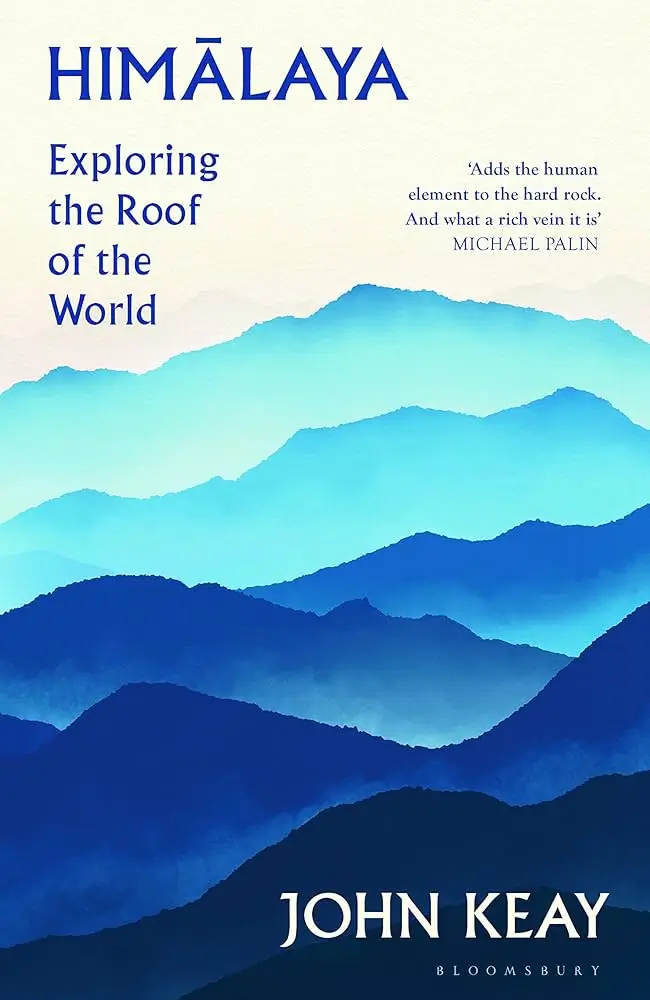
  • ‘Trouserless Tribals’ and Other Inanities | Review of John Keay’s Himalaya: Exploring the Roof of the World

    ‘Trouserless Tribals’ and Other Inanities | Review of John Keay’s Himalaya: Exploring the Roof of the World

    An edited version of this article was published in Hindustan Times

    John Keay, a correspondent in Kashmir in the 1960s, has written extensively on the Himalaya and exploration. His book The Great Arc: The Dramatic Tale of How India was Mapped and Everest was Named is an illuminating account of the longest measurement ever of the earth’s surface that stretched 1,600 miles and took over 40 years to complete. Considering his prolific oeuvre, I was curious about what more he had to say about the world’s highest mountain range in his latest book, Himalaya: Exploring the Roof of the World.

    But the work is hard to pin down. It is neither history nor biography, though it incorporates elements of both. It begins with the British expedition to Tibet that culminated in 1904, followed by two chapters on how the Himalaya came to be, and another on the fossils it harbours. Next is an investigation into the ancestry of Tibetans. I was not sure where the author was leading to, but then chapter after chapter dwelled on the exploits of people trying to “conquer” the mountain range.

    In the prologue, Keay hints at the meandering structure: ‘…this book may seem as disjointed as the Himalayan skyline…To provide a thread of continuity, I have instead focused on the human component in Himalayan studies, the personalities and their adventures, and I have sometimes taken liberties with the chronology.’

    While the randomness is vexing, I eventually got used to it. The problem, however, is that along with the chronology, he has also taken liberties with the ‘human component’—unless, by humans, he means dead white men (and one woman). The author’s focus is so disproportionately on European explorers that Himalaya’s habitants seem incidental to the narrative. Keay’s account treats them as objects rather than subjects, let alone as communities with rich cultures and lives. Tibetans, for instance, come across as people to be killed or hired as guides, when they are not shrouded in ‘mystery’, that is.

    Keay frequently quotes Orientalist excerpts from writings by colonial explorers, accepting them at face value without a trace of scholarly interrogation. Once or twice, he does call out imperialist conceit, but for the most part, it seems as if he has internalised their biases in his writing. His perspective is evident in his frequent use of words like ‘virgin’, ‘exotic’, ‘savage’, and ‘esoteric’. The book blurb terms the mountain range ‘confounding’. While I can understand why European authors writing a century or two ago would employ these descriptors, Keay using them today is infinitely more confounding than he makes the Himalaya to be.

    It gets worse though. In the chapter Gold Dust and Yak Tails, he writes: ‘…infected from within by Nepali migration, Sikkim now exists in little more than name and nostalgic remembrance.’ There are so many ways to formulate this sentence that do not involve comparing a social group to an infection. In the chapter Pilgrims’ Progress, he writes about the ‘ethnic frontier between the trouserless tribals and the better-clad Tibetans’. While this formulation is quintessential of Keay, I wonder how editors and proofreaders let a phrasing like ‘trouserless tribals’ go to print.

    Besides, if Keay’s focus was solely on explorers, it is befuddling that he did not bother to delve into the adventures of Indian voyagers, such as Pundit Nain Singh and Kishen Singh, whom he mentions several times in passing. Pundit was the term for Indian surveyors the British trained and employed to furtively map Tibet and other territories beyond the empire’s frontiers. Europeans were not allowed in these regions and the pundits disguised themselves as traders and pilgrims to garner information on the topography, politics, and culture.

    While Keay glosses over the pundits, he does dwell at length on some non-Europeans, such as Zorawar Singh, who invaded Tibet, and Kintup, an explorer from Sikkim. Though why he chooses to focus on them and not other equally pivotal figures is anyone’s guess.

    One could say that Himalaya’s structural anarchy is the only uniting thread between its wildly diverging narratives. The authorial decisions seem to draw from whimsy rather than logical or structural considerations. Keay skittishly jumps from one subject to another, often multiple times within a chapter. For example, in the chapter Sublime Deliverance, he bounces from Alexandra David-Néel, a ‘one-time opera singer turned Buddhist scholar’, to Colonel Leonard Francis Clark of the US army, Swiss geologist August Gansser, and Naro Bun Chon, a lama (For brevity’s sake, I have only mentioned a few of the many names that randomly pop up in this section). It is a roller coaster of a narrative that left me disoriented. The book does not offer any clues to these seemingly impulsive choices, making it a frustrating read.

    Occasionally, Himalaya does get interesting. In the chapter The Karakoram Anomaly, Keay writes about the Hunzakut in the Karakoram mountains differentiating between ‘male’ and ‘female’ glaciers, and how they use the ‘artificial insemination’ of ‘amorous glaciers’ to fulfill their water needs. But for the most part, it seems as if the author does not know how to extricate the grain from the chaff, leaving the reader bumbling through a bog of information.

    Even where Keay manages to be coherent, his dry writing left me parched. Even as a treatise on the adventures of colonial explorers, it fails. Himalaya reads as a catalogue of events, without a smidgen of storytelling. The excitement and passion that writers like Robert Macfarlane and Bill Bryson bring to nature or historical writing are sorely missing. This is most evident when Keay quotes other authors. The liveliness of those excerpts shines in stark contrast to his plodding prose.

    Himalaya begins with the line, ‘History has not been kind to Himalaya’. Unfortunately, neither has Keay in his book. At its best, it has interesting trivia every 50 pages or so. At its worst, it serves as a guide on how not to write a book.

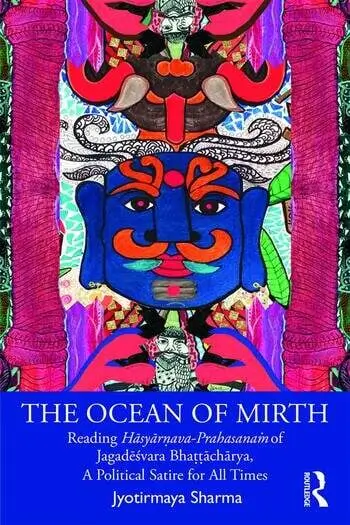
  • Sex, Subversion, and Sanskrit: Review of ‘The Ocean of Mirth’, a Bawdy Sanskrit Play

    Sex, Subversion, and Sanskrit: Review of ‘The Ocean of Mirth’, a Bawdy Sanskrit Play

    “Bound together by vine-like arms in sexual union, their exertion makes the unctuous sandal on their bodies gather with the steaming perspiration.” With its unabashedly sexual opening, the medieval Sanskrit comedy Hasyarnava-Prahasanam (The Ocean of Mirth) sets the tone for a riotous satire. Its outlandish humour punctures social norms, undermines hierarchies and lampoons religious strictures.

    Commentators of Sanskrit literature tend to divine mystical unions with god even in the most lurid of texts. The dalliances of Radha and Krishna in the 12th-century Gita Govinda, for instance, are explained away as the merging of the individual soul with the universal consciousness. Same is the case with Urdu and Persian literature — scholars often subsume sex into the metaphysical.

    Where sexuality is acknowledged, carnal descriptions are often cloaked in the garb of ‘eroticism’ to make it seem more literary. In his introduction to the anthology Erotic Poems from the Sanskrit, R Parthasarathy writes, “These poems reflect a culture that celebrates the pleasures of the flesh without any inhibition in a language that never gives offence, that never crosses the line but always observes the canons of good taste.” While such works indeed exist, there is also the crass, the offensive, which crosses the line with utter disregard for good taste and thus, does not find a spot in the literary canon. While we hear about Kalidasa and Banabhatta’s masterpieces, texts like Hasyarnava-Prahasanam remain obscure.

    A new translation, however, seeks to fill this literary lacuna. Jyotirmaya Sharma, Professor of Political Science at the University of Hyderabad, has rendered the satire into English and prefaced it with an incisive commentary. Compared to a 1976 translation by Ram Dayal Munda and David Nelson, his version is more successful at conveying what he deems “the original’s sparkling quality and unsettling energy”.

    The play transpires in the house of Bandhura (Inclined-Vulva), an ageing prostitute who “keeps count of paramours by counting the wrinkles on her body”. It begins with the king paying her a visit. He confesses he has not been able to keep track of civic matters because he is too busy plotting how to have sex with other men’s wives. As more characters enter the scene, we see the chaos enveloping their world. Ranajambuka (Jackal-of-War), the army chief, proudly shares his exploits of hollowing a bee with his sword, but faints at the sight of blood. Raktakallol (Joy-in-Blood), the barber, prefers cutting his clients’ arteries to their hair and nails. Mahanindaka (Might-Censurer) claims he has composed the Vedas instead of Brahma, whom he decries as silly. Two other brahmins and their pupils are among the many lusting after Bandhura’s daughter, Mrgankalekha (Streak-of-the-Young Moon’s-Crescent).

    The play echoes the sexual anarchy of Marquis de Sade (albeit without the violence or cruelty). The society in which it unfolds might come across as plumbing the depths of degeneracy. It, however, is not a moralistic tale highlighting evil and incompetence to warn of their dangers. In its all-encompassing anomie, there is no ethical compass one can seek recourse to. That makes it all the more interesting and open to interpretations.

    In his commentary, Sharma draws from various concepts, such as the king-brahmin relationship, in Kautilya’s Arthashastra and notions of dharma from the Mahabharata and Manusmriti among other texts to situate the satire. “It envisions disorder as the precondition for any concept of freedom,” he explains. “In exhibiting defiance, it warns us that a mindless quest for order, efficiency, safety and comfort can only lead to violence, cruelty, inequality and injustice… it offers a messy, fragile and chaotic sense of freedom.” For Sharma, this ungrounding of moral certainty anticipates the post-truth world and makes it a “political satire for all times”.

    Hasyarnava-Prahasanam also comes across as a subversive manifesto for egalitarianism. Bandhura is considered well-born because “even an outcaste from the lowest caste does not drink water at her house”. The characters mock each other — even the young Mrgankalekha ridicules the old men and the king is not spared — but the narrative treats them all the same. If anything, it lauds the prostitutes while highlighting the faults of those at the top rungs of society — the king, courtiers and priests. Its mockery of the brahmin characters harks back to the critiques presented by Carvakas, ancient Indian materialists who ridiculed rituals and metaphysical claims. Kalahankura (Tumour-of-Strife) wonders what is the point of studying the Vedas, worshipping the sun, serving his guru and attaining heaven if these do not help him embrace Mrgankalekha’s “urn-like lofty breasts”.

    For all its brilliance, little is known about the text or its author Jagadesvara Bhattacharya. While some have dated it to as late as the mid-18th century, Sharma weighs in on the different contentions and pegs its composition to sometime between the 14th and 17th centuries. “The usual signs used as internal evidence to date a text are unavailable. There are no references to Muslims, Jesuits, gunpowder, local gods and goddesses, folk or tribal traditions,” he explains. “Brahmins continued to write poetry and prose in Sanskrit, almost till the 19th century, inhabiting an altogether different temporality, ignoring historical events with benign condescension.”

    It is unfortunate that despite the rich heritage of Sanskrit literature spanning millennia, non-scholars know little beyond the epics and ‘the Shakespeare of India’, with an occasional nudge and wink to Kamasutra. Most think of Sanskrit as a repository of religious traditions, but it is also a fount of wit, humour, engaging storytelling and startling insights.

    In recent years, translators have rendered some lesser-known Sanskrit works into English. Notable among these are the publications of the Clay Sanskrit Library and the Murty Classical Library of India. While ancient Sanskrit literature from the “Golden Age” is usually foregrounded, former diplomat AND Haksar has translated medieval texts such as Srivara’s Kathakautukam, Vallabhadeva’s Subhashitavali and Kalyan Malla’s Suleiman Charitra. Srivara’s 15th-century play is an adaptation of a Persian love story that incorporates references from the Abrahamic religions and invokes Muhammad along with Shiva.

    Hasyarnava-Prahasanam’s milieu might not be as eclectic, but it is an intensely fascinating, thought-provoking work. Sharma’s translation and commentary are invaluable contributions that make this satire accessible to a new generation of readers.