Tag: Interviews

  • How We Can Make Global Health Programs More Effective and Equitable?

    How We Can Make Global Health Programs More Effective and Equitable?

    This interview was published on the Boston Congress of Public Health’s website.

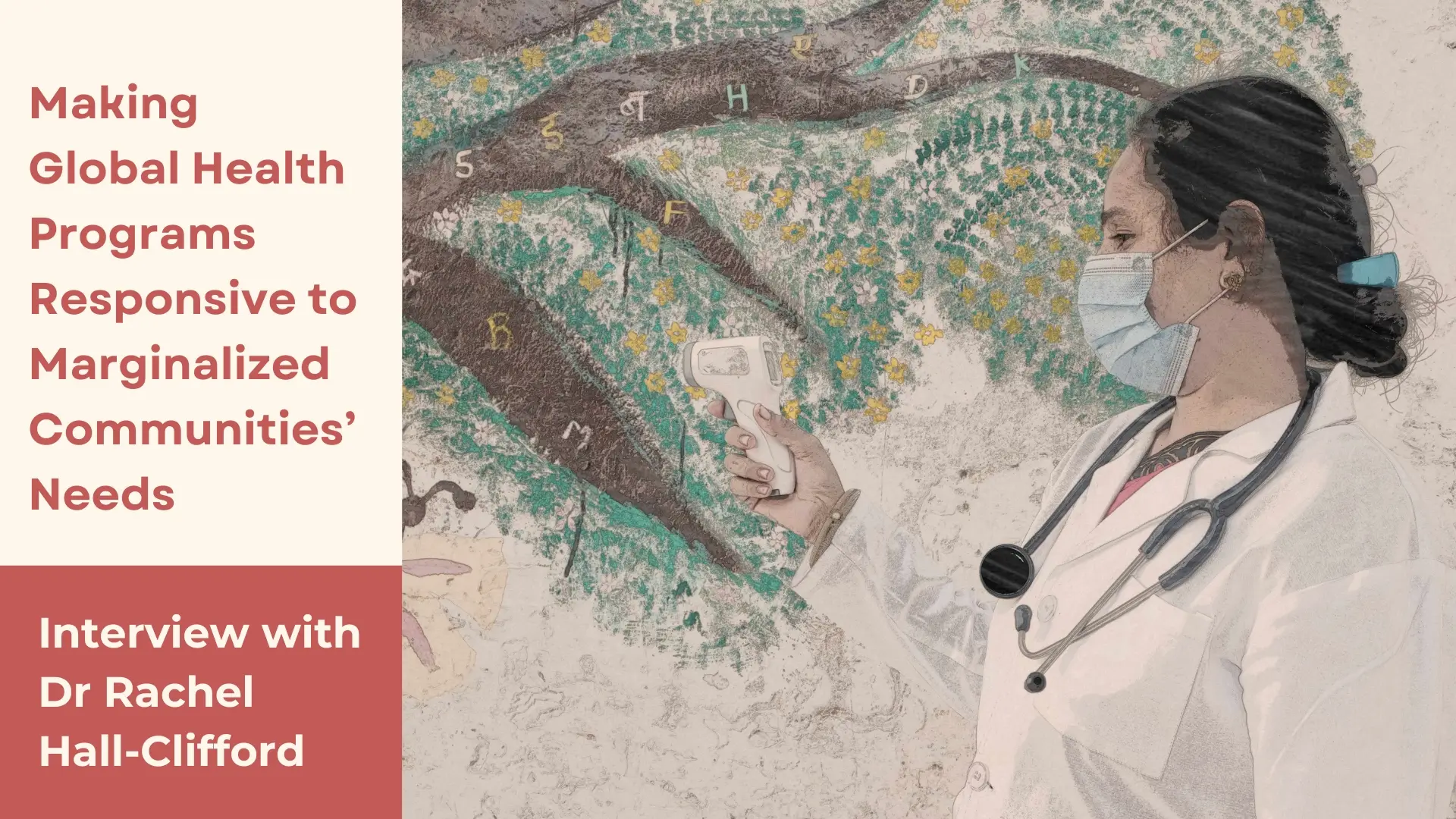
    Before Dr Rachel Hall-Clifford moved to Guatemala to study childhood diarrhea, she could not fathom why many kids were dying from the disease. Oral Rehydration Therapy (ORT) has helped prevent millions of deaths from diarrhea for over half a century. Compared to other public health interventions, it is fairly easy to provide. Yet, diarrhea remains the third leading cause of death in children under five globally.

    As Dr Hall-Clifford spent time in Guatemala, she realized that low ORT use was just one symptom of a public health system in crisis. Socioeconomic disparities and neoliberal policies, among other factors, have led to poor health outcomes, with the country’s indigenous Maya communities disproportionately bearing the brunt.

    In her book Underbelly: Childhood Diarrhea and the Hidden Local Realities of Global Health, published in 2024, Dr Hall-Clifford explores how international development and global health programs have been inimical to health equity and access. Despite their seemingly good intentions, they often cause harm by not considering communities’ lived experiences, unilaterally imposing ‘solutions’, and prioritizing technocratic approaches at the expense of primary care. [See Glossary #1 for details]

    I spoke to Dr Hall-Clifford to explore how we can make international health programs more responsive to marginalized communities’ needs, how public health professionals from high-income countries can promote global health equity, and her co-design initiatives for improved maternal and child health in Guatemala.

    Insights from Dr Rachel Hall-Clifford

    Dr. Hall-Clifford’s work on global health, childhood diarrheal disease, and the intergenerational impacts of undernutrition in Guatemala

    When I started university, I planned to go into medicine. However, I majored in anthropology and was interested in different cultures and places. I took a course on medical anthropology and suddenly, everything made sense to me. I understood that while I was passionate about health, I didn’t want to be a health provider — I wanted to work on health at the population level. So, I further studied medical anthropology and trained in global public health.

    In graduate school, I got interested in childhood diarrheal disease because it seemed like a problem that we should have been able to solve. The solutions appeared so simple and within our grasp, but it turned out that they can be incredibly challenging. Global health is like pulling a loose string on a sweater — everything is connected. If you work on one issue, you quickly recognize how interconnected it is to others.

    So, my work on childhood diarrheal disease led to issues of water quality, nutrition, maternal health, and equity. In rural Guatemala’s Maya communities, we see the embodiment of marginalization. There are incredibly high rates of chronic undernutrition and stunting [See Glossary #2 for details]. Due to intergenerational impacts, the Maya population is shorter today than when colonization began 500 years ago.

    The height differences between indigenous populations and others are not genetic, but socially prescribed. This is heartbreaking, but also compelling because we can change and improve these things. And that’s where my career has led me.

    The problems with global health and international development programs

    In my book Underbelly, I tried to link local experiences of global health with global health’s meta-structures — particularly with respect to oral rehydration therapy, but a host of other programs too.

    Many development professionals work in distant places from where programs are implemented. Global health starts from offices in Geneva, Atlanta, London, etc., but I argue that it should begin with communities. We need to change global health frameworks to recenter communities and their on-ground realities because our current approach is entrenching asymmetrical power dynamics. It replicates colonialist structures and also leaves big gaps. As a result, programs aren’t as effective as they could be.

    How neoliberal policies and certain kinds of foreign aid perpetuate colonial paradigms in global health

    I’ve been fortunate to live and work in Guatemala for much of the last 20 years. I’ve gotten to know the country well and I love it very much.

    In Guatemala, as in much of the majority world [See Glossary #3 for details], colonialist dynamics are still in play in terms of who is setting the agenda and who creates programmatic priorities. In our contemporary capitalist economy, the majority world is still used for resources. A majority of profits is extracted to high-income countries, which, in many cases, are former colonizing powers.

    There’s a lot of fine-grained economic debate we could get into here, but the US certainly has that sort of neoliberal, neocolonial relationship with Guatemala. The largest contributor to Guatemala’s economy is remittances from the US. There is a reliance on a very fraught migration to the US to support life and communities in Guatemala. This kind of clientelism is unfortunately a result of its colonial past. It also places the US in an incredibly powerful position in terms of dictating policies and priorities.

    Global health and development programs establish relationships of what I call ‘problematic gratitude’. The recipient countries are in a position where they can’t or don’t say no to any foreign aid and can’t dictate or even negotiate the terms of that aid. That leads to what I call ‘development dumping’ — lots of uncoordinated programs coming in through foreign aid. Public health programs constantly come and go, leading to fragmentation of the ground. This creates problems for health workers, but more importantly, for heath-seekers. In an ever-changing landscape, they find it difficult to get care that is geographically, financially, and culturally accessible to them, which prevents effective health-seeking behavior

    This fragmentation also replicates a neoliberal model where everything is a marketplace. In Guatemala’s health system, the quality of care has become conflated with cost. And so, people delay care hoping that they can save or raise money to get private treatment. However, the country has a government health system, which, on paper, guarantees the human right to health and access to healthcare for all citizens. But there are gaps in the system and people fall through.

    On her positionality as a White scholar from the USA in global health

    I love the opportunities I’ve had to work in global health, but as a White lady from Tennessee, USA, I shouldn’t be leading them. The experts who have lived in and trained in the majority world and represent the population they are working with should be our leaders.

    I have enjoyed recent conversations about decolonizing global health and often think about how we can move from conversations to action. I have tried to address that in my work through co-design. My approach to co-design is that I do not take on projects that don’t originate in the community. The community could be a village, social group, or even at the national level.

    I absolutely should not be sitting in my nice office at Emory University and thinking of interesting ideas to try out elsewhere. I should be contributing to the efforts identified by a community, perhaps by facilitating resources or expertise. That’s the role I can play, given my training and positionality.

    On co-design to build more equitable and effective global health programs

    Co-design is one of many tools we need for more equitable global public health. It involves working with the community to identify problems together. So instead of a professional coming in and saying, ‘You need ORT here’, the community must identify the challenges they want to address. There are always multiple challenges, so having the community prioritize and set goals is essential.

    In recent years, we’ve seen movement in global health toward community engagement efforts. But too often, those just comprise a single meeting where there’s already a pre-formed project and project managers try to convince people it’s what they want. Co-design, on the other hand, says, ‘Let’s have everyone at the table before we get started.’

    The community should lead the way. So, after they decide to focus on a certain issue, we can identify existing technologies, prototypes, etc that can help solve the problem. What I typically do is present these options back to the community and let them decide how they want to proceed based on what they find appealing and accessible. The solution is developed, iterated, and implemented collaboratively.

    Each component of the co-design process is based on agile design methods, so that you can do trial-and-error with end users to arrive at a workable solution, which can then be implemented more broadly. Ongoing feedback from and engagement with end users has led to improvements in project sustainability as well because it’s their idea and it’s their project. So, once the solutions are in place, they are more likely to maintain them.

    It’s important to be clear with co-design partners in terms of what’s scientifically possible and what the standards are. I never want a co-designed effort to be less than other programs or lead to poor-quality healthcare. I’ve learned that you have to be upfront with the community about this goal. There is also sometimes a limitation in terms of what aspects of a program can be co-designed.

    On her co-design project safe+natal

    Safe+natal is a peri-natal monitoring toolkit co-designed with lay Guatemalan midwives — Kaqchikel-speaking Maya women who are birth attendants. The toolkit is powered by a smartphone and has peripheral devices, such as a blood pressure cuff and a one-dimensional Doppler ultrasound.

    Midwives use it during pre-natal visits to identify the standard World Health Organization checklist of pregnancy complications in pregnant women. With the peripheral devices, we can identify hypertension, preeclampsia, and fetal growth restriction. This helps us prepare for a safe birth.

    There’s a strong cultural preference for home births in the central highlands of Guatemala. We support that, but we also identify pregnancies likely to need facility-based care, either during pregnancy or childbirth. Our project partner, Wuqu’ Kawoq or the Maya Health Alliance, is an outstanding example of a local health-provider organization that has been doing this work. The network of midwives that use the safe+Natal toolkit liaise with local providers operating within the Maya Health Alliance to quickly facilitate transfers for facility-based care.

    Through this project, we’ve seen incredible reductions in perinatal complications and maternal mortality and it’s been running for a decade. So, I think of this as a real co-design success story.

    Why safe+natal has been successful

    It has pushed back against the received wisdom in global health that technologies should only be in the hands of skilled end-users. Our co-design partners are Kaqchikel-speaking Maya midwives and have low literacy levels. Some had never used a smartphone before participating in this project, but now use it effectively. That’s been exciting to see!

    A key reason for the success was the co-design of the mobile app itself, which is pictogram-driven and uses audio instructions in the Kaqchikel language. Midwives designed it for their own use. So, they added visual guidance and one of their colleagues provided the audio instructions. That makes it intuitive and accessible for them.

    Water-quality testing co-design project

    This is a work-in-progress project in partnership with Universidad del Valle and EcoFiltro, a water filtration social enterprise, in Guatemala.

    Philip Wilson, a colleague and friend at Ecofiltro, first thought of a point-of-use water-quality testing device that community workers can use to show the need for water purification. He said, ‘Rachel, I need to be able to just point my phone at a glass of water and see if it’s contaminated.’

    I thought that’s a tall order. But we started surveying available technologies and looked for something that was easy to use and didn’t involve a complex training process or supply chain, like microscopy tools. Now, after a few years’ work, I think we are close to a solution.

    We are still working on the hardware — essentially a microscope that clips onto a cell phone camera. We have a protocol for collecting water, fixing a sample onto a slide, putting the slide into the microscope, and taking the picture. And then, we use AI object detection to look for E. coli in the sample.

    Unfortunately, E. coli is present in up to 98% of Guatemalan drinking water sources and largely accounts for diarrheal disease in the country. So, it is exciting to co-design this project with Guatemalan partners and see if we can improve the real-time water-contamination detection. This will help drive water purification in households and enable citizen science for water systems advocacy.

    Through her co-design projects, Dr Hall-Clifford demonstrates how we can take steps towards making global health programs more equitable and responsive to the needs of marginalized communities. While scholars and public health professionals have voiced concerns about the current frameworks of foreign aid and international development programs, conversations around the issue need to result in concrete action. Those who work on such projects must be mindful of entrenched inequities and hierarchies and work towards involving communities, overcoming fragmentation through greater collaboration, and challenging existing power structures.
    Glossary

    1. A technocratic approach gives weightage to narrow technical skills and expertise. In healthcare, it has been criticized for promoting the objectification and alienation of patients12 and undermining the social determinants of healthcare.
    2. Primary healthcare seeks to bring services for health and wellbeing closer to communities through integrated health services that meet people’s health needs throughout their lives and by addressing the broader determinants of health through multi-sectoral policy and action.
    3. Majority world Dr Hall-Clifford uses the terms high-income countries and majority world instead of Global North/South; developed/developing; high-income/low and middle-income; global minority/majority to ‘intentionally foreground the prevailing wealth of a few countries within a supposed system of mutuality that perpetuates inequality’.
    4. Stunting is when a child’s height is low for their age. It is largely irreversible and can have lifelong adverse health effects.
  • How Can We Protect Mothers and Babies against Climate Change?

    How Can We Protect Mothers and Babies against Climate Change?

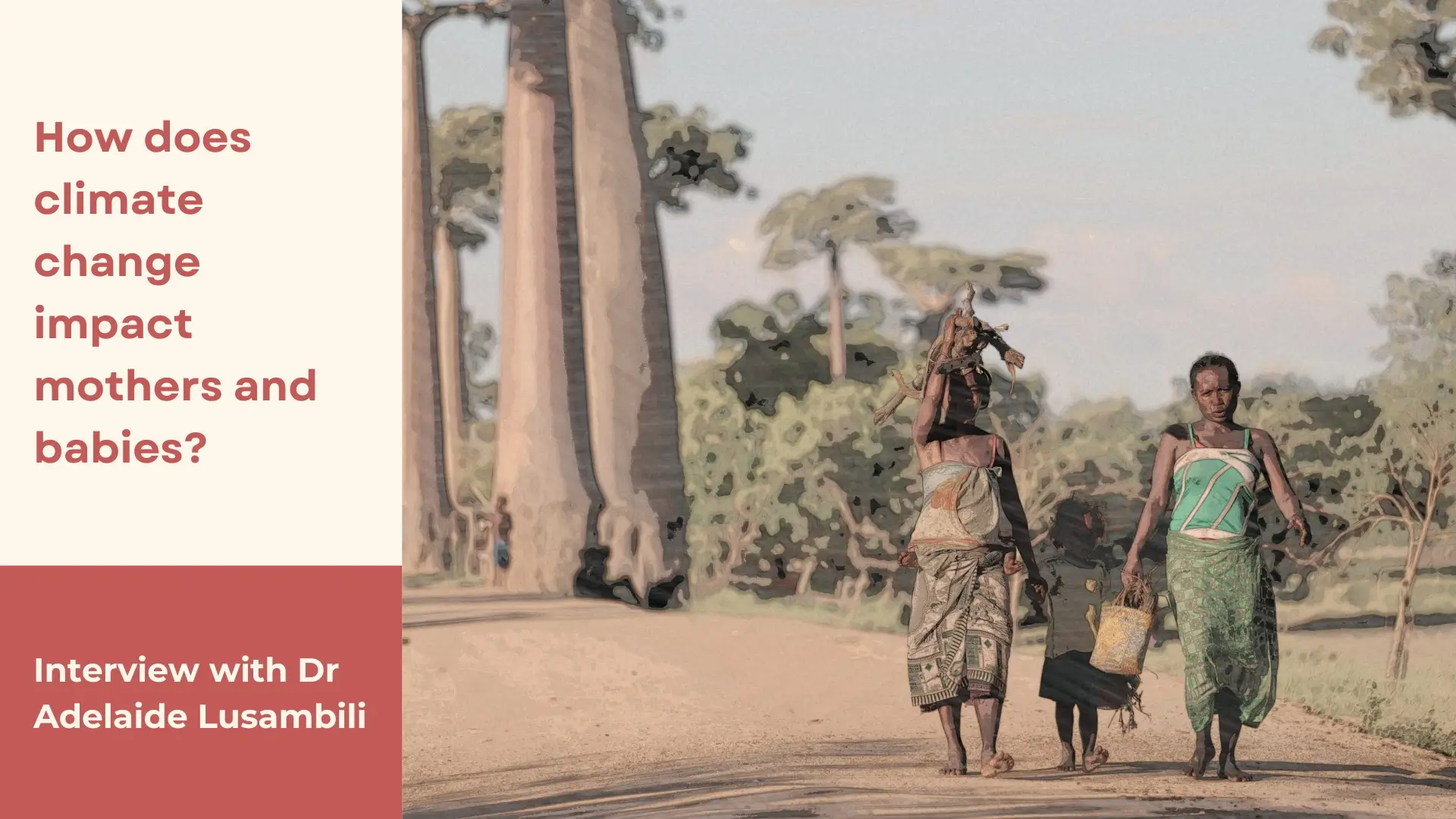
    Many studies have linked heat stress during pregnancy with negative outcomes, such as low birth weight. For every 1°C rise in temperature, the odds of preterm birth and stillbirth rise by 5%. Heat waves increase the risk of preterm birth by 16%. 

    However, we do not have enough evidence regarding the pathways by which heat exposure results in these problems. We also do not know the safe limit of heat exposure for pregnant women. Moreover, there is a lack of studies from low- and middle-income countries, where the effects of climate change are often the most pronounced. 

    To understand the impact of climate change on maternal and child health and explore safeguarding measures, I spoke with Dr Adelaide Lusambili, a lead investigator in the Climate, Heat and Maternal and Neonatal Health in Africa project

    Dr Lusambili is an internationally recognized scientific researcher and educator with over 18 years of experience in the UK and several sub-Saharan African countries.  She is an Associate Professor at Africa International University in Nairobi, Kenya. Dr Lusambili has over 50 publications on a range of public health issues and has spoken at international forums, such as COP, Africa Health Agenda International Conference, and World Meteorological Organization.

    You can listen to the podcast with Dr Adelaide Lusambili here. The edited transcript is below.

    Dr Adelaide Lusambili, scientific researcher and educator

    Expert Insights from Dr Adelaide Lusambili 

    Research on climate change’s impact on maternal and child health

    The issue has gained attention only recently and research on the topic is just beginning. Climate change impacts are broad, ranging from flooding to extreme temperatures. My research has focused on high ambient temperatures and how they are impacting maternal and child health.

    While there is some research on the topic, we have limited funding for it. We need more evidence, especially epidemiological evidence, to inform policy and interventions.

    Climate, Maternal and Neonatal Health in Africa (CHAMNHA) project

    CHAMNHA was a consortium of different universities across the globe to understand the effects of heat stress on pregnant women and newborns. We also wanted to generate evidence to inform public health responses and support plans for adaptation in sub-Saharan Africa. We had different workstreams: a group of experts codified the impacts of heat stress in Kenya and Burkina Faso, there were qualitative studies, and there were interventions based on our findings.

    Public health challenges in Kilifi County, Kenya, where Dr Lusambili conducted research 

    Kilifi is on the east coast of Kenya. The areas where we collected the data were very hot—in summer, temperatures can rise to 45°C (113F). The communities there have low literacy levels, high birth rates, and high maternal mortality rates. The infrastructure is poor in terms of transport and healthcare facilities. 

    Effect of extreme heat on mothers and newborns in the region

    We found that extreme heat leads to extreme exhaustion during pregnancy—women cannot continue performing daily activities. It also compromises certain behaviors. For instance, when it’s hot, they don’t go to health facilities for ante-natal care to avoid walking in the heat. In the east coast of Kenya, malaria is rampant, but they are not able to use mosquito nets due to the heat. This increases the risk of malaria. 

    Extreme heat has also impacted water sources, so women need to travel longer distances to look for drinking water. There is a greater risk of violence as they have to go to unsafe places to look for water. It has affected food production as well, leading to a scarcity of food. All these factors amplify anxiety and other mental health issues. 

    Women who get dehydrated due to the heat often end up having a Cesarean section because they can’t push out their babies. Heat is also likely to lead to early labor. Healthcare workers may not be prepared to assist women during heat stress because they don’t have the right tools and that affects outcomes during deliveries. 

    Postpartum women talked about a lack of adequate food and water. They don’t eat enough, leading to low breast milk production. So, they cannot exclusively breastfeed their child for the first six months. Even maintaining personal hygiene and cleanliness at home becomes difficult. They don’t go to get post-natal care at health facilities due to the heat. They are worried about their babies, food, water, and hygiene, so they become more anxious and irritable.

    Mothers also talked about having more underweight babies—they link this to poor nutrition. They mentioned the discomfort newborns go through and how the health of babies is compromised. They get blisters on their body and tongue, making it difficult to breastfeed them.

    Key takeaways from a co-design workshop organized with various community members to discuss what interventions can help mothers and their newborns in periods of high temperature

    We held the co-design workshop to bring together all the stakeholders in Kilifi and present findings from our research so that they could deliberate on possible interventions to support women against climate impacts. One of the key takeaways was that the water system needed to be upgraded because most women walked long distances in the heat to fetch water. 

    Another was behavior change interventions. Since heat has been normalized in these settings and they don’t see climate change as real, women continue to perform activities that could be harmful to them and their children. These behaviors include walking in the heat with their babies, not using mosquito nets, and covering their children in many layers of clothing due to traditional norms. Nature-based solutions such as planting trees and keeping the environment clean also came up during the

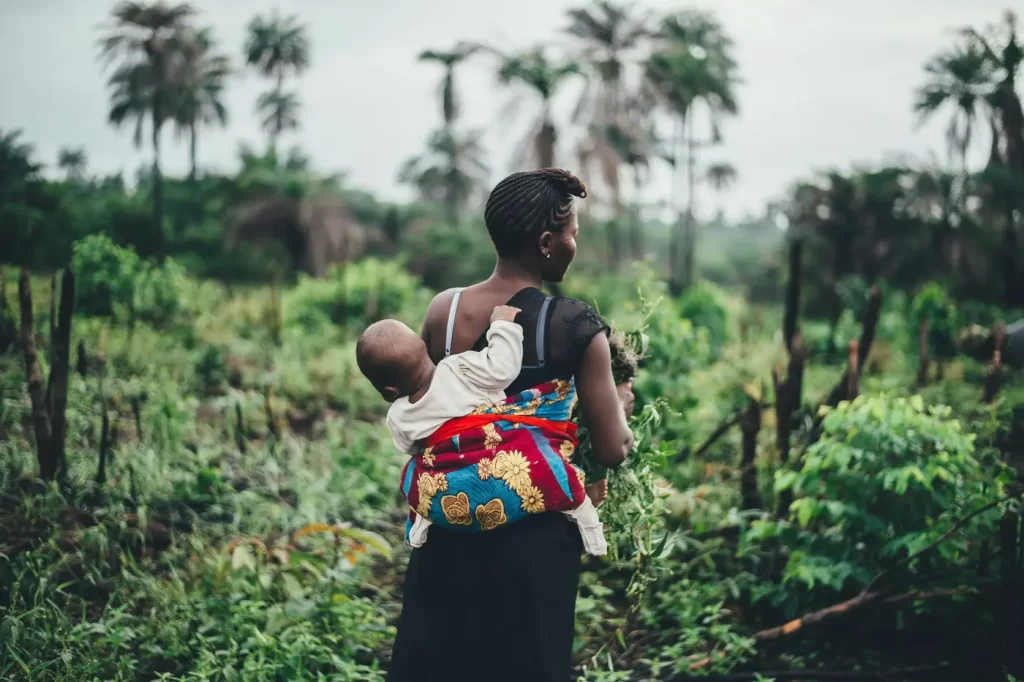
    A woman in a black dress with a baby strapped to her back looks at a field. Her back is to the camera and both her and her baby’s face is not visible.
    Social and behavior change interventions can help mitigate the impact of climate change on mothers and babies. Photo by Annie Spratt, Unsplash

    Why people don’t see heat as a problem or don’t believe that climate change is real

    People didn’t see climate change as something real because in some parts of Africa and especially where we collected our data, the climate is tropical—temperatures have been high for decades. So when we talk about climate change, they say, “It’s always been hot, what’s the difference between now and before?”

    When we talk about the effects they’re experiencing, they say, “Now, we’re seeing more maternal deaths and more women don’t attend ante-natal check-ups.” They begin to see how things are changing, so we ask them, “Don’t you think that’s climate change? The heat is increasing.” 

    Given the lack of knowledge about the impact of heat, the co-design workshop sought to raise awareness among the community so that they can come up with locally supported interventions to protect against it.

    Ethical dilemmas of conducting research in high ambient temperatures

    I have conducted research on various topics, but this experience was different because we collected data during high temperatures. This had deleterious impacts on both the researchers and participants. I wrote this paper so that ethics committees or teams putting protocols are aware of these challenges. In extreme heat, it’s unlikely that participants will sit through an interview for an hour—they have babies, they have to walk long distances, and their homes are heated. So, there should be a shift in how ethics committees approve research. They have to carefully examine the context where research is being conducted and ensure that it is in the best interest of everyone so that no one group suffers.

    What Dr Lusambili change about how we currently approach climate change and maternal and child health

    That’s a difficult one! I want everything to change. 

    But what would make a big difference is ensuring that communities are informed about the impacts of climate change on mothers and babies and are given the tools to support them. 

    A key point that came up during the co-design workshop was the need for a social and behavior change campaign. Because of the communities’ social and cultural norms, women are expected to continue working when they are pregnant and even immediately after childbirth. These norms are harmful to mothers and babies and need to change. 

    There is a need for spouses, mothers-in-law, and other relatives to support mothers and babies with daily activities and in attending ante-natal care and post-natal care at health facilities. Societal support can help enable simple behavioral changes such as drinking more water, boiling water before drinking, using bed nets, and avoiding walking in the heat with babies. 

  • Can AI Save Lives? The Experience of an Indian Nonprofit

    Can AI Save Lives? The Experience of an Indian Nonprofit

    There are many AI tools for maternal and child health, such as apps to detect malnutrition in children and algorithms to predict risks and complications during pregnancies.

    But these tools raise several questions: what are the benefits and downsides of AI compared to current approaches? What are the challenges and risks of using AI? How can we ensure that AI tools promote health equity and access rather than deepening existing divides?

    I delved into some of these issues in a podcast with Amrita Mahale, the Director of Product and Innovation at ARMMAN. ARMMAN is an Indian nonprofit that creates cost-effective, tech-based solutions to reduce maternal and child mortality and morbidity. Through its programs, the organisation has reached around 50 million women and children, and 400,000 health workers in 21 states across India.

    Interview With Amrita Mahale

    What are the maternal and child health challenges that ARMMAN is trying to address?

    India has made great strides towards reducing maternal mortality, but still, every 20 minutes or so, a woman dies in childbirth. And for every woman who dies, many more suffer lifelong complications. 

    One challenge is low healthcare-seeking behavior. Due to patriarchal strictures and norms, neither women, nor their families pay much attention to their health needs. These issues are exacerbated for women from low-income and low-education backgrounds.

    Besides, community health workers are often underskilled and overworked. They are supposed to provide basic care for simple conditions, but that doesn’t always happen. So, women either delay seeking care, opt for private clinics (which can be expensive), or go to tertiary health facilities (which are usually overburdened) [See Glossary #1 below for more details]. Delay in accessing healthcare increases the risk of severe complications and deaths. If you have good preventive care systems, most complications can be averted or caught early and dealt with at the health system’s lower levels. That way, only the most acute cases go to secondary or tertiary facilities. 

    How is ARMMAN using technology to solve these challenges?

    Our programs broadly fall into two buckets. One, programs that empower women with preventive care information through pregnancy and infancy so that they seek healthcare early and regularly.

    Two, programs that train and support health workers to better provide healthcare and detect and manage complications early. We try to prevent health complications and ensure that when they occur, they are tackled at the health system’s lower levels to avoid overburdening tertiary facilities.

    Two of our largest programs are Kilkari and Mobile Academy. Kilkari, which we run in collaboration with the Government of India, delivers weekly pre-recorded messages to women over mobile phones from the fourth month of pregnancy till the child turns one. It has reached over 47 million women to date and has 3.5 million active subscribers across 20 states of India. Mobile Academy trains frontline health workers known as ASHAs [See Glossary #2 below for more details] using phone-based training modules. Another program is mMitra, which sends automated voice calls with critical health information to around 100,000 women in the state of Maharashtra. 

    There have been Randomized Controlled Trials (RCT) [See Glossary #3 below for more details] to evaluate the impact of our programs. The mMitra RCT showed a 38% increase in pregnant women who completed the prescribed doses of iron-folic acid tablets and a 22% increase in the number of children who tripled their birth weight after one year. There were also improvements in tetanus vaccine uptake, consulting a doctor for spotting or bleeding during pregnancy, and delivery in a hospital. John Hopkins University conducted the RCT for Kilkari about five years ago. It showed improvements in the vaccination of children, delivery in a hospital, use of contraceptives, and fathers’ knowledge regarding maternal and child health.

    What prompted you to use AI in your programs?

    ARMMAN has been using AI for several years now, starting with the mMitra program. In mMitra, we observed dwindling engagement over time, which is common for mobile health programs globally. Some listen actively for a few weeks or months, but since the program goes on for 18 months, they stop listening for various reasons. We wanted them to listen to every message during the program because, say, if a pregnant woman drops out before the child is born, she will miss out on information related to immunization, exclusive breastfeeding, complementary feeding, etc.

    We had some rules-based systems to avoid drop-offs. So, when a woman stopped listening, we would call her from our call center, but it would often be too late. And the bigger challenge is that we don’t have a large workforce. These resource constraints meant that we couldn’t call everyone who stopped listening. So, we wanted to identify and predict listenership patterns early on and strategically intervene to ensure higher success rates.

    We realized that we have a lot of data, so why not use AI to solve this problem? We partnered with Google Research India and used restless multiarmed bandit algorithms to predict which users are likely to drop off and who among them will benefit the most from an intervention.

    Now, we are trying to do the same in Kilkari as well. It’s different from mMitra, where we enroll the women ourselves and collect demographic information. So, it’s easy to transfer insights from older cohorts to newer ones. When a woman joins, we can figure out a lot based on her socio-demographic characteristics and information from past subscribers.

    In Kilkari, we have no demographic information, so all we can do is look at a woman’s listening trajectory and make predictions about her future. So, we had to make many tweaks to the AI approach to meet the needs of a national program like Kilkari. But because we’ve done it once, we know what to expect and how to design an effective AI study. 

    We follow an evidence-based approach to scaling innovation. So, we start with small pilot projects [See Glossary #4 below for more details] and then increase their scale before large rollouts. 

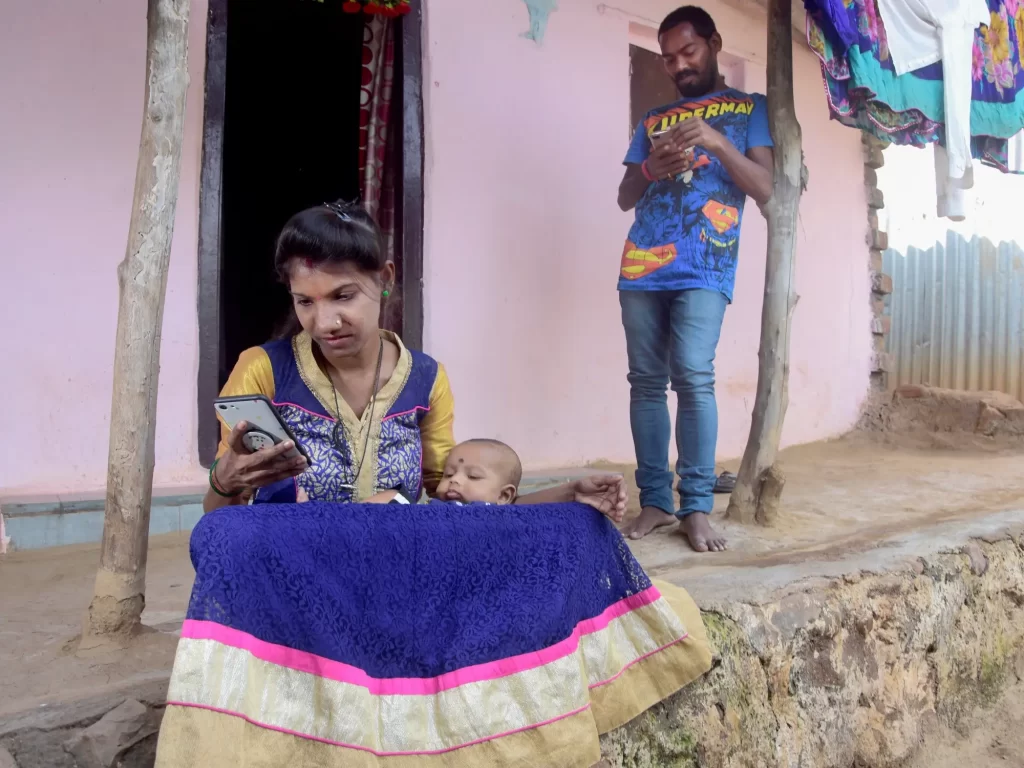
    A woman in a blue dress scrolls through a phone as she sits outside a house with a baby on her lap. Behind her is a man in a blue shirt and jeans, standing and looking at his phone. The house’s facade is pink and there are clothes drying in the background.
    ARMMAN shares messages regarding maternal and child health over the phone. Photo Credit: ARMMAN

    What other AI initiatives are you working on?

    We are working on broadly two kinds of AI projects: 1) Using machine learning and data science to improve our programs 2) Using generative AI and Large Language Models (LLMs) [See Glossary #5 below for more details].  

    We are planning a pilot where we use AI to predict what the best time slot to call a woman is. And this is a great example of using insights from the real world to select a use case to deploy AI.

    We’ve seen in rural India that phone usage patterns are very different from urban India. In cities, we keep checking our phones, but this is not common among our target audience. They use their phones early in the morning, then get busy with domestic chores or work in the fields and check their phones again only after lunch or at the end of the day. So in a day, there are only 2-3 brief windows during which we can reach these women. And many share their phones with their husbands, who might be away at work for most of the day.

    But in Kilkari, women can’t choose a time slot to receive calls. And we don’t know if they are using shared phones. So how do we know when to call them? We are thinking of using AI to optimize which time slot the woman gets a call in. We are still in the brainstorming phase, but later this year, we’ll run a pilot to see if we can use machine learning to predict the best time to call a woman, especially given the constraints of the automated calling system.

    The other kind of AI solution we are excited about uses generative AI and LLMs. Last summer, we decided to build a learning program for Auxiliary Nurse Midwives (ANMs) [See Glossary #6 below for more details]. We had earlier developed 20 detailed protocols on high-risk factors. We train workers face-to-face regarding these protocols and provide them with digital learning materials for self-paced learning. However, ANMs would sometimes get overwhelmed because of the information overload. 

    So, we started a WhatsApp helpline where they could pose queries and doctors would respond. The doctors are overworked, so they would often take hours or days to respond. Eventually, ANMs stopped using the service because they were used to getting answers at the speed of a Google search. 

    That’s when we thought of using LLMs to not generate an answer, but pick the most appropriate response from a list of frequently asked questions and answers in response to the ANMs’ queries. Or the LLM would generate an answer, which the doctor would verify before sending it to the ANM. But we saw that the LLM generated excellent answers! So, we thought of keeping the doctor out of the loop and having the LLM send responses directly to the ANM.

    It’s interesting you say that you found LLMs useful because they are often criticized for generating incorrect, incomplete or biased responses. How did you overcome these challenges?

    Yes, we were nervous about this problem, so we approached it with caution and responsibility. It was clear to us that we would not launch anything without validating it thoroughly and that we would evaluate the model in small, incremental steps. So, we did not just let the LLM make up answers.

    We use something called retrieval-augmented generation — we force the LLM to take answers from the training manuals and clinically validated protocols we had created. In this aspect, we were privileged compared to other organizations trying to build chatbots because we did not have to create any resources from scratch. All we had to do was make them more machine-readable. Since they are learning aids for health workers, the protocols are visual — there are flowcharts, decision trees, and images. So, we had to convert those into plain text, which was slightly time-consuming. 

    We also had a lot of evaluation materials — health workers take quizzes at the beginning and end of the courses, which help us evaluate the courses’ impact on learning levels. We also have a module on ethics. These became evaluation materials for the LLM. We made sure at every step that the LLM was able to give correct answers in the quiz and match the ethical aspects with the correct answers. So, even before we began using LLMs widely, we ensured it worked well in a variety of contexts.

    How do you ensure that AI applications promote health equity and access rather than deepening existing divides?

    We follow a problem-first approach and not a technology-first approach for our innovation pilots — AI as well as non-AI. We identify the core problem we have to solve for our users and how technology or AI can solve this problem more efficiently. That ensures we use AI only to create meaningful impact. 

    ARMMAN’s pilots also go through an ethics review. There is an interdisciplinary team that looks at the study design and preliminary results and thinks through the risks: potential harm and sources of bias. 

    We work with external collaborators on our AI projects, but we do not share any personally identifiable information with them. Internally also, only those who cannot do their job without this data have access to it; others don’t. 

    To ensure equity, we follow inclusive design principles. We do extensive user research to understand how our AI projects, especially LLMs, will be used, perceived and interpreted on the ground. We figure out who could get left out if we introduce certain technologies in our program. 

    For example, in the case of the chatbot we spoke about earlier, we did user research even before we developed the chatbot. We used a prototyping technique called ‘Wizard of Oz’. In this experiment, we simulate an automated experience, but a human actually controls the flow. For the chatbot, we had ANMs send their questions on WhatsApp, but instead of chatbots responding, a human at the other end replied using a set of scripts. It was not a free-flowing conversation. 

    We learnt early on that many ANMs cannot type. They have nursing diplomas, they can read and write, but they are not comfortable typing complex messages with medical terms. So, they defaulted to sending voice messages. Our initial plan was to launch a proof of concept that only used text mode because voice is much harder to get right. But after the experiment, we realized that we couldn’t launch a product that didn’t have voice mode because many ANMs would be left out. Often, the ANMs not comfortable typing are the ones who probably need this kind of service the most. So, it wouldn’t just leave out a certain percentage of users, but also those users who would benefit the most from the service. So, we made sure we prioritized voice mode even if it delayed development.

    Glossary

    1. India has a three-tier public health system: primary, secondary and tertiary. Primary healthcare comprises community health workers and doctors at ‘primary health centers’. They are often the first point of contact for most pregnant women and families.
    2. ASHA stands for Accredited Social Health Activist. They are Indian grassroots health workers who provide health education and encourage people to avail of public healthcare services.
    3. A randomized controlled trial (RCT) is a scientific study to test the efficacy of an intervention. In these studies, participants are randomly allocated to either a treatment group (those who receive the intervention) or a control group (those who do not receive the intervention).
    4. Pilot projects are small-scale preliminary studies to test new services, projects, or products before deploying them at a large scale.
    5. Machine learning is a branch of artificial intelligence (AI) that enables machines to automatically learn from data and past experiences to identify patterns and make predictions with minimal human intervention.
      Data science is the study of data to extract meaningful insights.
      Generative AI is an artificial intelligence technology that can produce content such as text, video, images, etc., usually in response to a prompt.
      Large Language Models are artificial intelligence tools that can comprehend and produce human language. For example, ChatGPT.
    6. Auxiliary Nurse Midwives are grassroots health workers who provide basic nursing care. They provide antenatal check-ups and immunization, among other maternal and child health services.
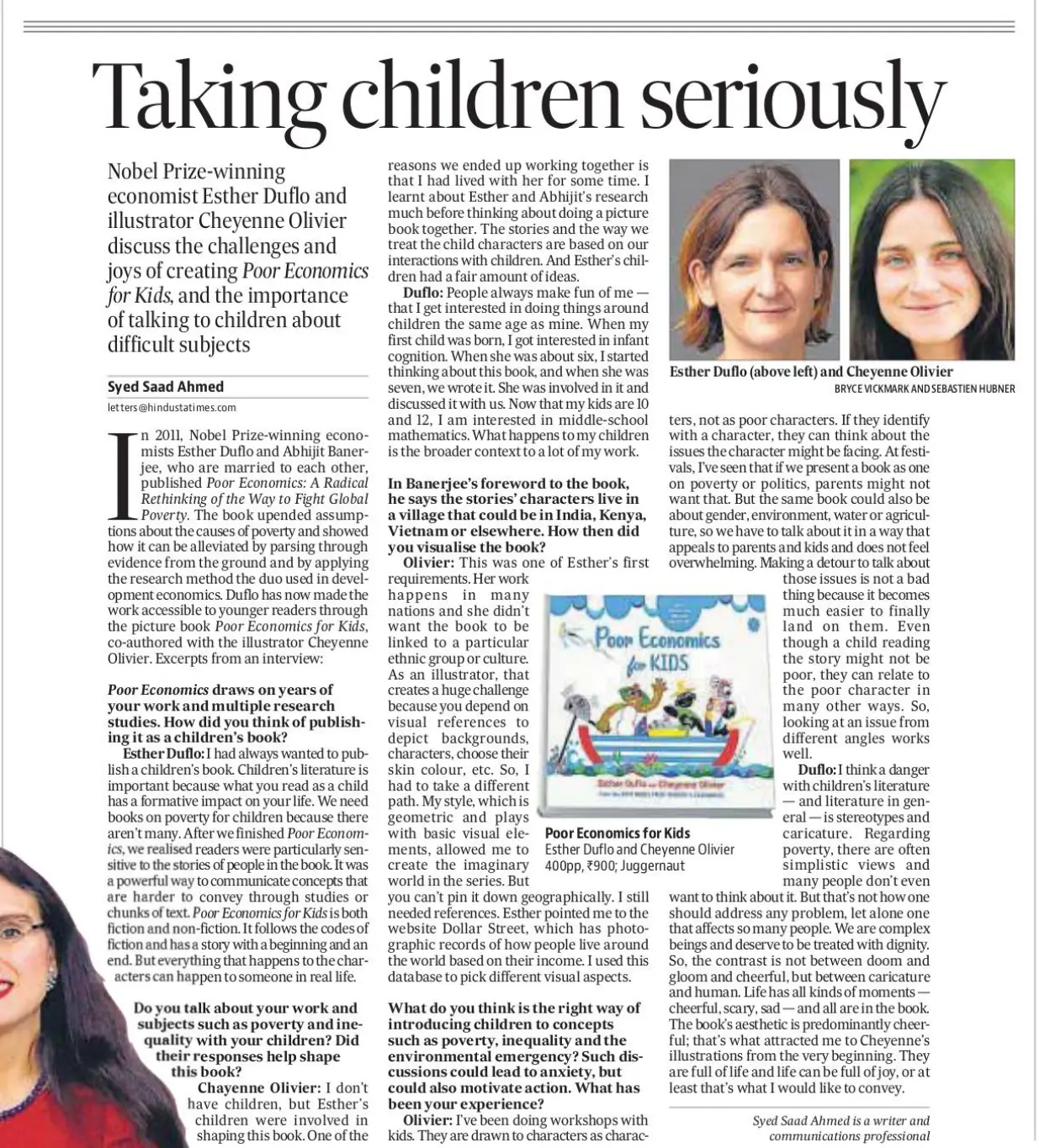
  • Interview: Esther Duflo and Cheyenne Olivier on Their Book Poor Economics for Kids

    Interview: Esther Duflo and Cheyenne Olivier on Their Book Poor Economics for Kids

    An edited version of this interview was published in Hindustan Times

    In 2011, the Nobel Prize-winning economist Esther Duflo wrote the book Poor Economics: A Radical Rethinking of the Way to Fight Global Poverty with her husband Abhijit Banerjee. It upended assumptions about the causes of poverty and how we can end it by parsing through evidence from the ground and applying the research method whose use they pioneered in development economics.

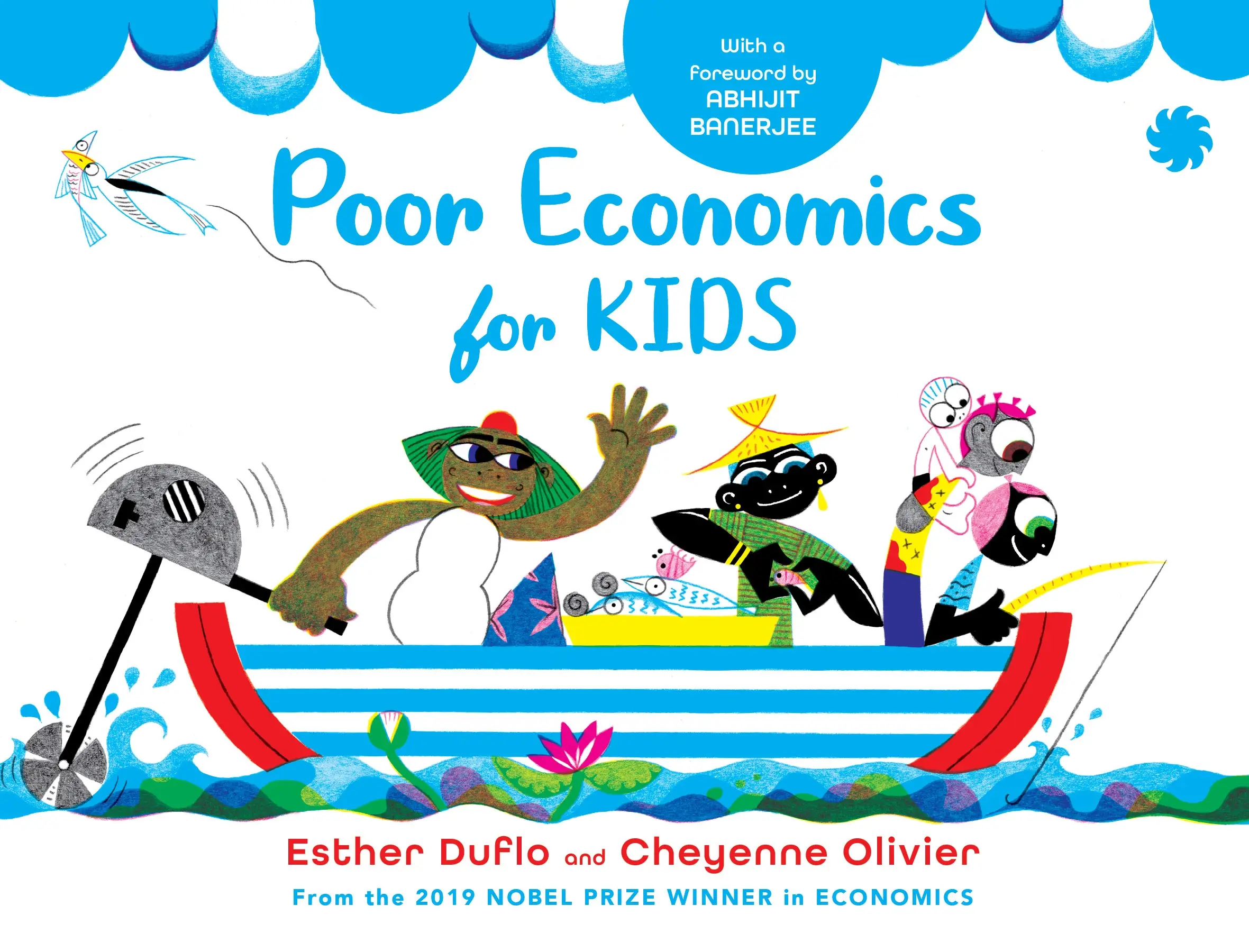
    Duflo has now made her work accessible to younger readers through the picture book Poor Economics for Kids, co-authored with the illustrator Cheyenne Olivier. In an interview over Zoom, Duflo and Olivier talk about collaborating on the book, talking to children about difficult topics, and the challenges and joys of creating the stories.

    Poor Economics draws on years of your work and multiple research studies. How did you think of publishing it as a children’s book?

    Esther Duflo (ED): I had always wanted to publish a children’s book. Children’s literature is important because what you read as a child has a formative impact on your life. We need books on poverty for children because there aren’t many.

    After we finished Poor Economics, we realised that readers were particularly sensitive to the stories of people in the book. It was a powerful way to communicate concepts that are harder to convey through studies or chunks of text. Each story makes a particular point. And with fiction, we could synthesise the lives of the many, many people we had met over the years into fictional characters.

    Poor Economics for Kids is both fiction and non-fiction. It follows the codes of fiction and has a story with a beginning and an end. But everything that happens to the characters can happen to someone in real life.

    Do you also talk about your work and topics such as poverty and inequality with your children? Did their responses play a role in shaping this book?

    Cheyenne Olivier (CO): I don’t have children, but Esther’s children were involved in shaping this book. One of the reasons why Esther and I ended up working together is that I had lived with her for some time. In some sense, this is also how the book started. I learnt about Esther and Abhijit’s research much before thinking about doing a picture book together. And she also had the time to see my illustrations.

    The stories and the way we treat the child characters are based on our interactions with children. And Esther’s children had a fair amount of ideas.

    ED: People always make fun of me — that I get interested in doing things around children the same age as mine. When my first child was born, I got interested in infant cognition. When she was 5–6, I started thinking about this book and when she was seven, we wrote it. She was involved in it and discussed it with us. Now that my kids are 10 and 12, I am interested in middle-school mathematics. What happens to my children is the broader context to a lot of my work.

    In Abhijit Banerjee’s foreword to the book, he says that the stories’ characters live in a village that could be in India, Kenya, Vietnam, or elsewhere. Given that you didn’t want to pin down the geography, how was the process of visualising the book?

    CO: This was one of Esther’s first requirements when she proposed this series. Her work happens in many nations around the world and she didn’t want the book to be linked to a particular country, ethnic group, or culture.

    As an illustrator, that creates a huge challenge because you depend on visual references to depict backgrounds, characters, choose their skin colour, etc. So, I had to take a different path. My style, which is geometric and plays with lines, shapes, colours, and basic visual elements, allowed me to create the imaginary world in the series. Everything is built around a limited set of shapes and colours that I mix and match so that it becomes a coherent universe, but you can’t pin it down.

    But I had to draw floors, houses, clothes, etc, so I still needed references. Esther pointed me to the website Dollar Street, which has photographic records of how people live around the world based on their income. I used this database to pick different visual aspects, such as the shape of a pot and patterns on the floor, and combined them.

    Did you also take inspiration from artworks and other books while developing the visual style for this series?

    CO: I’m very much influenced by artists’ books for children, especially Russian experiments of the 1920s. They are geometric, on the verge of abstraction. People tell me that my drawings sometimes echo art from a certain period in Bengal — those were also influenced by the communist aesthetic.

    Esther, you mentioned that you had had the idea for the book for a long time and Cheyenne, you said you were living together. What was the process of collaboration on the book like?

    ED: From the get-go, I envisioned this as a series of books. In English, it is published as one book with distinct stories. They revolve around topics from Poor Economics. While they follow the book’s structure, they can be read in any order.

    I’ve had the stories — what happens in them, what the characters do — in my system for a long time. I started by conceptualising the narrative as pages of text. Cheyenne and I discussed the text and transformed it into a 32-page storyboard that depicts what happens in each frame. She also flagged issues with the stories, such as logical incoherences, too much happening, things that are too brief to make sense, etc. She then created images as per the storyboard. I would review these and provide feedback, such as this person cannot possibly be doing that or that doesn’t correspond to people’s lived experiences. Then, she made the final drawings. It was extraordinarily cooperative. We were often literally in the same room.

    Eventually, our French editor, Céline Ottenwaelter, also joined this dance. She has extensive experience working with children and on children’s literature, and she contributed a lot.

    So, it’s not as if I wrote the story, shipped it to Cheyenne to illustrate, and then packed it into a book. It was a thoroughly collaborative project!

    CO: It was interesting because I realised I had many prejudices: visual and otherwise. Even though I had read Poor Economics, I inadvertently made mistakes because they added dramatic flair. I felt it would be more interesting if a kid had to travel for a long time to reach school rather than go to the nearest village. But in reality, that’s not the case anymore.

    So, it was nice to have my ideas refined and get the opportunity to do things differently. Sometimes, you can jump straight to the point you want to make, but is that the most important thing in a story? At times, we have to focus on the aspects that make the characters appealing, such as, say, the relationship between a mother and a child.

    When you have 32 pages to develop a story, you could make a point on each page, but you also need to give the reader a break and allow the characters to go about their daily life. There is an idea that poverty is a relentless series of dramatic events or heroic fights without joy. But that is not the case. So, there are pages in the book where children just play together because that’s what children do.

    Developing a series was helpful in this regard. It allowed us to explore different parts of the village and see the characters evolve. The teacher is perhaps not a positive character initially. She’s angry and frightened in the first story, but helps the kids throughout the next story.

    There are close to 50 characters, many of whom recur over the 10 tales. We fleshed them out in each story while maintaining continuity with earlier ones. This was important because in Indian languages and French, we published each story as a separate book, but we didn’t want kids to have to buy the whole series to be able to follow them.

    What do you think is the right way of introducing children to concepts such as poverty, inequality, and environmental crises? It could lead to anxiety and a sense of doom, but it could also motivate actions to change the status quo. What has your experience been in this regard?

    ED: That’s a good question for Cheyenne because she’s conducting academic research on how to represent poverty in children’s literature.

    CO: I’ve been doing workshops with kids. They are drawn to characters as characters, not as poor characters. If they identify with a character, they can think about the issues the character might be facing.

    In a workshop with migrant children, the story in the series about migration helped them talk about their journey to France. It was a good way to initiate a dialogue, though you don’t jump to the topic after one reading.

    At festivals, I’ve seen that if we present a book as one on poverty or politics, parents might not want that. But the same book could also be about gender, environment, water, or agriculture, so we have to talk about it in a way that appeals to parents and kids and does not feel overwhelming.

    Making a detour to talk about those issues is not a bad thing because it becomes much easier to finally land on them. Even though a child reading the story might not be poor, they can relate to the poor character in many other ways. So, looking at an issue from different angles works well.

    ED: I think a danger with children’s literature — and literature in general — is stereotypes and caricature. Regarding poverty, there are often simplistic views and many people don’t even want to think about it. But that’s not how one should address any problem, let alone one that affects so many people. We are complex beings and deserve to be treated with dignity.

    So, the contrast is not between doom and gloom and cheerful, but between caricature and human. Life has all kinds of moments — cheerful, scary, sad — and all are in the book. The book’s aesthetic is predominantly cheerful; that’s what attracted me to Cheyenne’s illustrations from the very beginning. They are full of life and life can be full of joy, or at least, that’s what I would like to convey.

    CO: We tried to make the stories open-ended. We proposed a specific solution, but many things were left unresolved, so that permits multiple readings. Children can read into the stories and images — any aspect can catch their imagination and propel them into another world.

    EO: The book should be readable for everyone, even though the presentation might be altered for different kinds of readers. I think we succeeded because three publishers have brought it out and each has different views about where and who they want to market it to. In France, it’s for young kids and their parents, so each story has an essay at the end for adults.

    In India, Juggernaut has marketed the English version to tweens and teens, so it has essays for them. In Bangla, Hindi, Marathi, etc., they are meant to be fun books for young readers, so Pratham Books has published them separately in cheap volumes without the essays. They have sent it to libraries all over the country as part of their efforts to disseminate high-quality reading materials.

    It’s encouraging that publishers, whose job is marketing books, think that the book is for everyone and hopefully, readers will think the same.

    How have readers responded to the series so far? In India, it just came out, but in France, you published the stories from 2022 onwards.

    EO: Many parents said they wouldn’t read Poor Economics because while it is for the lay reader, it still requires focus and perhaps some knowledge of economics. They enjoyed reading Poor Economics for Kids more and learned a lot from it.

    We did a radio show in France where there were questions from children. We realised that they have many prejudices, which we hadn’t even thought about. For example, they thought the poor don’t have any clothes or are dirty. It was striking — a lot needs to be done to address these prejudices.

    It was heartening, though, that children got attached to certain characters and kept going back to them. For me, a children’s book is successful if kids want to keep rereading it and talking about it.

    One of the best responses was of a four-year-old kid who saw a poor person on the street and exclaimed to their parents, ‘That’s the witch from the Bibir story.’ The ‘witch’, of course, is not actually a witch, but a positive character. The fact that a child in France thought of the character from the series on seeing a homeless person is remarkable. It meant the story left a lasting impression on them.

    CO: People appreciated that the universe we created is funny, not gloomy. Many children’s picture books are set in gloomy urban environments. But when parents buy a book, they want it to leave a smile on their child’s face.

    Were there any ideas you wanted to explore in the series, but did not include because you thought they were unsuitable for children?

    ED: No topic was off-limits. In fact, the opposite happened — we included more topics, such as climate change. These were not prominent in Poor Economics because it was written about 15 years ago. So, in a sense, Poor Economics for Kids is more up-to-date than its predecessor. Of course, we didn’t include everything we covered in Poor Economics, but this was to ensure narrative coherence, not because they were unsuitable.

    You have to treat readers as intelligent beings, regardless of their age, and take them seriously. You can talk about everything, even in a subtle manner — you just have to make the effort. Our series reflects that vision.

    CO: We also have to consider what’s most apt for the story. In Poor Economics, there is an anecdote where parents beat children and their teacher. There are various ways we could have gone about this: do we show it or say it explicitly in the text? Should we say it in the text, but not in the image? Would these depictions deviate from what we ultimately want to say?

    As per our narrative strategy, it might not be something we want to emphasise, and therefore, we don’t show it. It’s not self-censorship, but a question of what would be most efficient and strategic for the story.

    What were the most challenging and joyful aspects of developing the story and writing the book?

    ED: There were many joys — one was inventing the stories. The other was collaborating to embody the stories into this wonderful product. The narrative and illustrations gave my work a dimension I never dreamt it could have.

    There were no huge challenges, but 10 stories is a lot of work and took a long time. I also had to restrain myself from adding everything so that the stories could be streamlined. Inventing stories proved surprisingly easy — I could have had many more.

    CO: My background is in comics, so I never had to create such a large universe before. It took time and effort to build the characters, create different environments, and get the colours right so that the illustrations are vivid. I swam in this universe for the last four years, especially since my thesis is also on it.

    Another challenge was getting the tone right since kids always want to read something more challenging than what they can actually read. There is something genuine about a child opening a book and liking it within seconds. You want to achieve that somehow. But I could only know if I succeeded after four years of working on it. That is a huge challenge, but also a pleasure when it finally happens.

    Besides, before I met Esther, I wanted to link my illustrations to social and environmental issues, but I was unsure how to do so. My ideas were floating without a specific placeholder. This book gave me the perfect opportunity to do that.

    Print Version of the Article

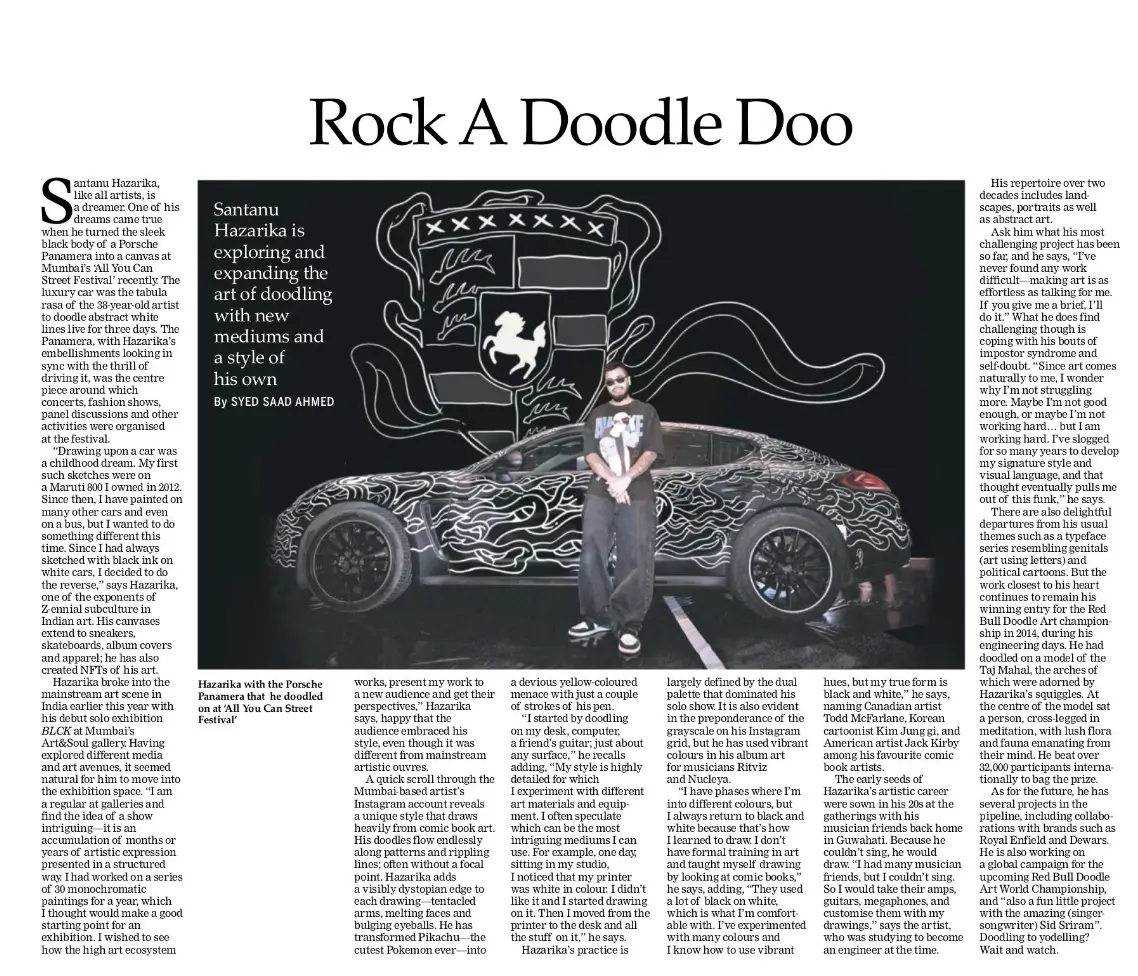
  • Rock A Doodle Doo: Profile of the Artist Santanu Hazarika

    Rock A Doodle Doo: Profile of the Artist Santanu Hazarika

    An edited version of this article was published in The New Indian Express.

    Santanu Hazarika’s latest artistic medium is a Porsche Panamera. He doodled on the car for three days at the All You Can Street Festival in Mumbai. “It was a live performance,” he says. “The Panamera was the centrepiece around which concerts, fashion shows, panel discussions and other activities were happening.”

    “Drawing on a car was a childhood dream—it’s an iconic canvas. The first one I sketched on was my Maruti 800 in 2012. Since then, I have painted on many other cars and even a bus. But I wanted to do something different. I had always sketched black on white cars, so I decided to do the inverse: draw white on a black car.”

    Apart from vehicles, Santanu’s art has materialised on canvas, sneakers, skateboards, album covers, apparel and as NFTs. “When I started doodling, I would do it on my desk, computer, a friend’s guitar, just about any surface,” he says. “My style is highly detailed and I experiment with art materials and equipment to execute that. I often think about the most intriguing medium I can draw on. For example, one day, sitting in my studio, I saw that my printer was all white. I didn’t like it that way, so I started drawing on it. Then I moved from the printer to the desk and all the stuff on it.”

    He traces this habit to his lack of musical talent. “I had many musician friends in Guwahati, where I’m from, but I couldn’t sing,” he explains. “So I would take their guitars, megaphones, amps, etc. and customise them with my drawings. I guess that’s why I’m drawing on a supercar today.”

    Santanu’s doodles seem to flow endlessly along patterns and rippling lines and often do not have a focal point. While he has used vibrant colours, such as in his album art for the musicians Ritviz and Nucleya, his Instagram grid has a preponderance of the grayscale.

    Regarding this predilection, Santanu says, “I have phases where I’m into different colours, but I always return to black and white because that’s how I learned to draw. I don’t have formal training in art and taught myself by looking at comic books. They used a lot of black on white, so that’s what I’m comfortable with. I’ve experimented with diverse colours and I know how to use vibrant hues, but my true form lies in black and white.”

    This colour palette also featured in his first solo exhibition, BLCK, held in February 2022 at art&soul, Mumbai. “After exploring different media and art avenues, it was natural to opt for an art exhibit. I am a regular at galleries and found the idea of a show intriguing—it is an accumulation of months or years of artistic expression presented in a structured way. I had worked on a series of 30 monochromatic paintings for a year, which I thought would make a good starting point for an exhibition. I wanted to see how the high art ecosystem works, present my work to a new audience and get their perspectives. Thankfully, people embraced my style, even though it’s different from what you usually see at galleries.”

    When I ask him about his most challenging project, he says, “I’ve never found any work difficult—making art is as effortless as talking for me. If you give me a brief, I’ll do it.” What about his bouts of impostor syndrome and self-doubt, which he’s confessed to on Instagram? “Since art comes naturally to me, I sometimes feel like I’m not struggling enough,” he replies. “I think, why am I not facing more difficulties? Maybe I’m not good enough, maybe I haven’t explored much, maybe I’m not working hard… but I am working hard. I’ve slogged for so many years to develop my signature style and visual language. That thought eventually pulls me out of this funk.”

    Indeed, Santanu’s work is quite prolific. There are also delightful departures from his usual themes, such as a typeface series resembling genitals and political cartoons. But the work closest to his heart is his winning entry for the Red Bull Doodle Art championship in 2014. He had doodled on a model of the Taj Mahal, his squiggles adorning its many arches. In the centre is a person seated cross-legged in meditation, with lush flora and fauna seemingly emanating from his mind. “I was miserable doing engineering then and failing in all subjects, so that doodle became the turning point in my life,” he says. “Thanks to doodling, I learned to design, sketch and draw and reached where I am now.”

    Print Version of the Article

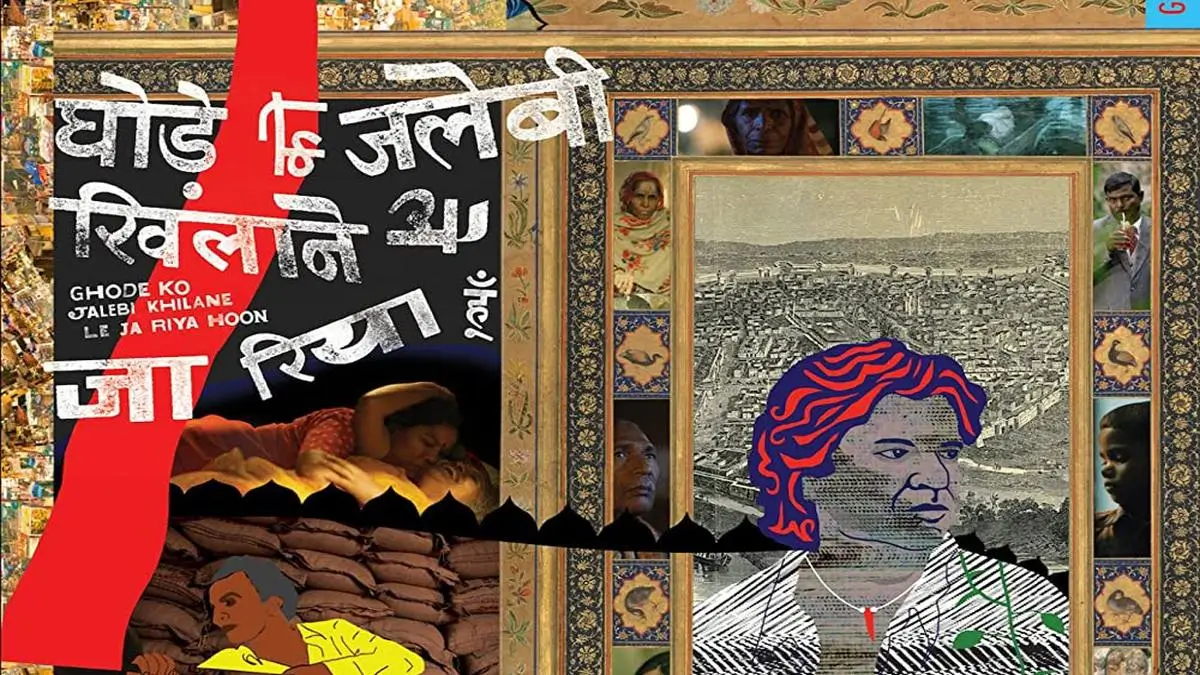
  • Anamika Haksar on Ghode Ko Jalebi Khilane Le Ja Riya Hoon’s 7-Year Journey to Theatre Screens

    Anamika Haksar on Ghode Ko Jalebi Khilane Le Ja Riya Hoon’s 7-Year Journey to Theatre Screens

    This interview was first published in News Nine

    On a heritage walk in Old Delhi, a tourist asks the guide Patru about local folk stories. He stops a passer-by, Savitri, who narrates one: ‘My son used to live with his grandparents. There was a well near the house. He fell in it and died.’ Unimpressed, the tourist wants another folk story, only to hear an even more morbid anecdote.

    This hilarious episode is one of several in Ghode Ko Jalebi Khilane Le Ja Riya Hoon (Taking the Horse to Eat Jalebis), theatre veteran Anamika Haksar’s film debut. The movie uses documentary vignettes, dream sequences and staged scenes to capture the lives of people on the streets of Old Delhi: daily-wage labourers, hawkers and pickpockets, among others. It features four protagonists played by professionals and 350 non-actors living in the locality.

    Ghode Ko… released in theatres on June 10. Syed Saad Ahmed speaks to the director, Anamika Haksar, about the making of the film, its unique structure and the challenges her team faced.

    The film took about seven years to complete. Could you walk us through your journey?

    I started writing a fictional account of three people sitting on a street in Old Delhi, their difficulties and dreams. But I realised that to explore these deeply, I had to get on the road and talk to folks. So, we made a questionnaire asking people about their daily lives, what they are afraid of, what they think about when they wake up, etc. My team members — Lokesh Jain, Sarita Sahi and Chavi Jain — talked to about 70 people over two years. Excerpts from these interviews became the characters’ dialogues.

    Lokesh Jain, who plays the heritage guide Akash Jain, wrote the film’s fictional dialogues. I wanted to capture the richness of tongues in Old Delhi: Hindustani, the street Hindi, Bhojpuri and other languages brought by migrant labourers.

    We shot in 2015-2016 in three schedules: summer, winter and a five-day wrap-up in February 2016. It took five to six months to edit. There were many deliberations with the visual effects producer Soumitra Ranade, production designer Archana Shastri and cinematographer Saumyananda Sahi, about how to represent people’s dreams, both through the camera and VFX. We used folk styles from around India for the animated sequences, which took a long time. Plus, I didn’t have funds.

    There were reports that you sold your house to fund the film.

    No, I didn’t sell my house. I am 63, suffer from arthritis and have a child whose fees I have to pay — so I can’t afford to be on the road. I gave my house to a developer and got some money out of it. I used that, but I also broke fixed deposits, took loans from banks, and asked people and trusts for money, who gave anything from ₹1,000 to ₹5 lakh.

    Did you have to cut corners because of budget constraints?

    Hmm… maybe if I had more money, there wouldn’t have been so much struggle at every stage. After a point, it was too much. It hinders the peace you need to make a film. But I guess fighting challenges also gives you strength.

    The film’s first festival screening was in 2018 and it’s releasing in theatres in 2022. Take us through that journey.

    I wanted the film in cinema halls because I wanted to show it to the people of Old Delhi we worked among. After the premiere at MAMI, the movie travelled to festivals around the globe. It was much celebrated after Sundance.

    In 2020, the film’s release was stalled by the pandemic. So, we sat for two years. OTT platforms didn’t want us because they thought it wouldn’t sell. When COVID-19 eased, I asked my friends for a good distributor. Rajat Kapoor suggested Shiladitya Bora, who has released quite a few indie films no one else would touch. I was also hospitalised due to COVID-19, so that delayed things further.

    How many people were there during the shoot? What kind of problems did you face?

    We usually had 15 crew members, apart from the actors. There were as many as 30 people for some scenes. We had permission for all the locations, but encountered problems. Old Delhi is quite crowded and often, tempers would rise. Suddenly, a group would come and scream, ‘Stop this!’ Some people thought we were from Bombay and had lots of money, which we were supposedly handing out to everyone but them. There are many such stories behind every scene and lots of absurd humour.

    Could you share an incident that was particularly interesting or outlandish?

    I’ll tell you my favourite. We were shooting with some people who had migrated from Vidarbha and lived on the streets near Hanuman Temple. Rahul, the most educated in the group, would explain the scene and read the dialogues to them. One day, he saw a person rummaging through a dustbin, and finding it suspicious, called the police. They discovered that someone had planted a bomb, so Rahul got high security. He was living on the street and had two security guards shadowing him all the time! One day, when he was reading the dialogues, a guard said, ‘Why are you making him do this? He doesn’t know how to deliver dialogues. Let me teach him. I have done an MA from Panjab University.’ So, we gave him the responsibility and he coached Rahul.

    There were funny incidents in the film too.

    I am glad you got the black humour. Some people get it, some don’t, but mostly they do. We had a screening in Brazil, where the audience cracked up even though they were watching it with Portuguese subtitles. They said, ‘This film is about us, about the problems we face in our country. It’s very close to us.’

    The film does not have a plot in the conventional sense. How did you give it a structure?

    Let me tell you another story. I visited a homeless shelter in Karol Bagh. A woman living there was once a cook at a big Bollywood star’s house. After she became old, they abandoned her. Her only asset was a sari and a cage with a white mouse. People’s experiences indicated that anything could happen when you live on the street. Considering this precarity, I didn’t want a set structure for the film.

    When you’re homeless, society does not consider you an entity, you can be shoved around. Anyway, in life, who knows what will happen? I wanted the film’s structure to reflect this quality.

    Did the film change drastically on the edit table compared to how you had envisioned it earlier?

    Definitely! Paresh Kamdar is a fantastic editor and I’m grateful to have him as a guide. I’m a theatre person and wanted to include everything in the film. He’d say, ‘Are you mad? This scene is not important. It’s not theatre.’ I’d start crying: ‘DK bhai will feel bad if his scene is not in the film. How will I show my face to him if we remove it?’ ‘Do you want to make a six-hour-long film?’ Paresh would retort. We used to fight and cry — it was like a battle. Eventually, my only instruction was that the film should not be predictable. The moment we know what’s going to happen, things have to change. He gave the film a shape, but he also used to give up at times and say, ‘I can’t understand a thing!’

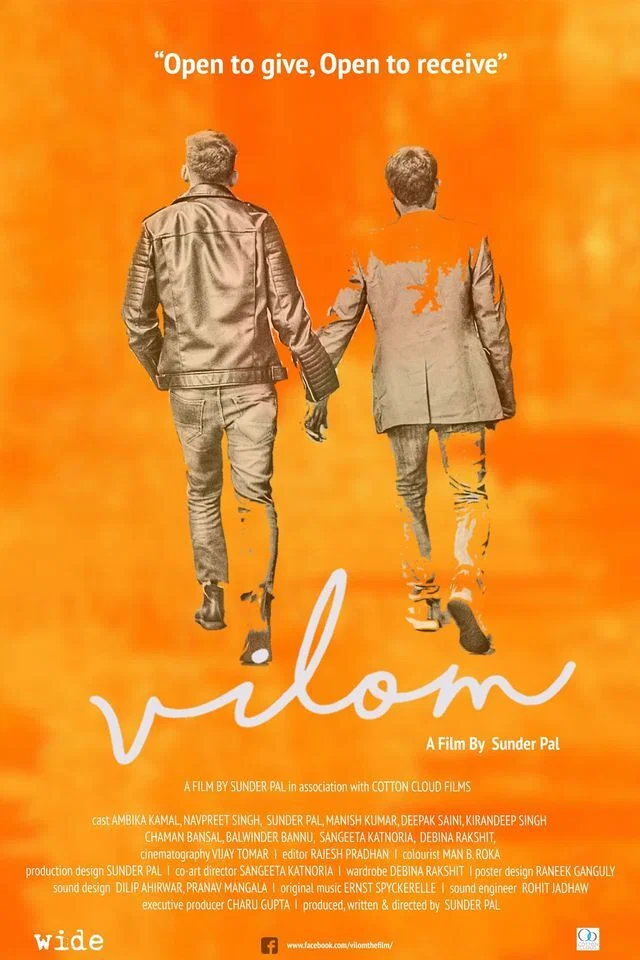
  • “I Wasn’t Getting Work as an Actor. I Made a Film so I Could Act”: Sunder Pal, Director, Vilom

    “I Wasn’t Getting Work as an Actor. I Made a Film so I Could Act”: Sunder Pal, Director, Vilom

    An edited version of this piece was published in The Tribune

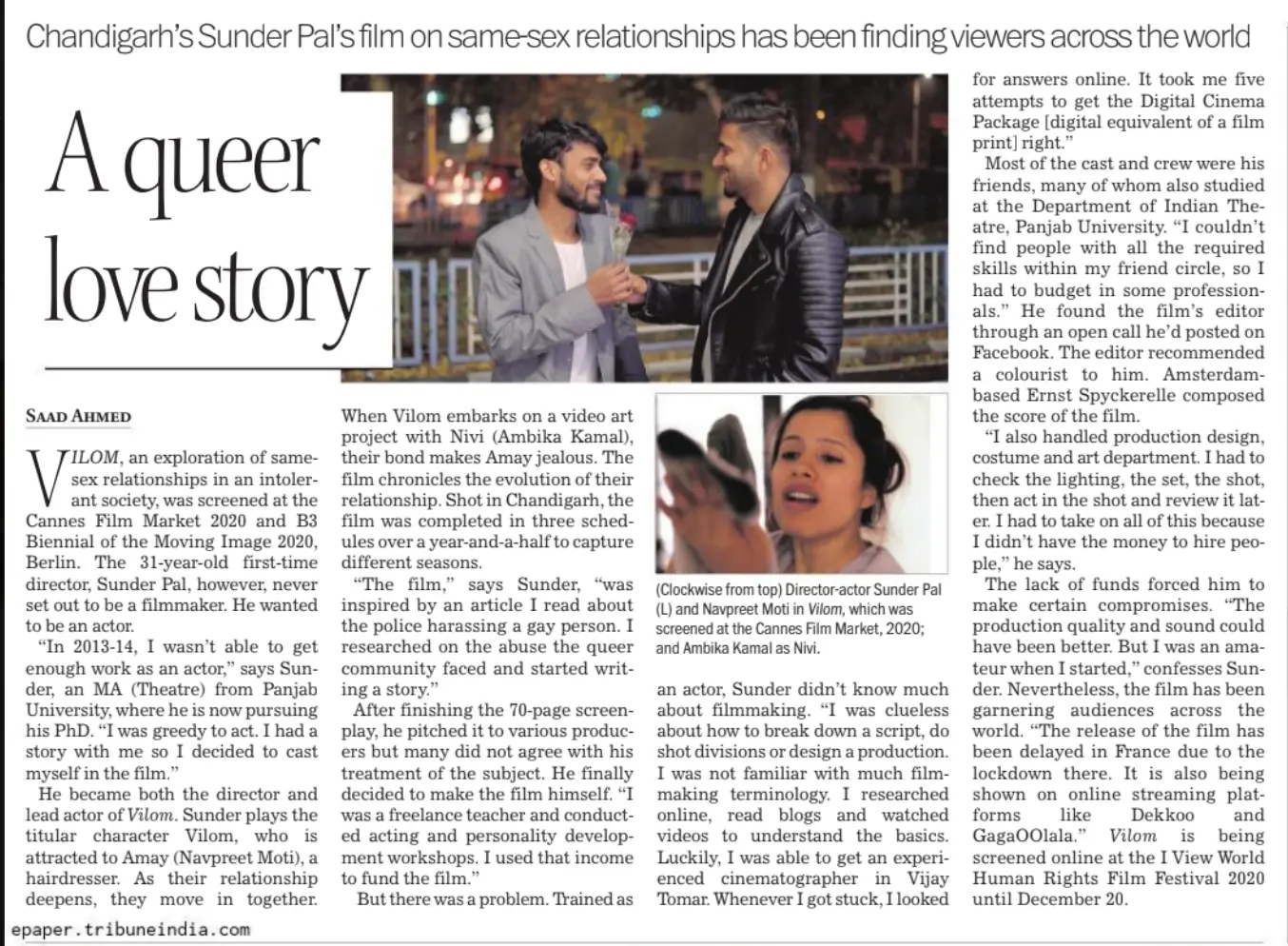
    Sunder Pal’s film Vilom, an exploration of same-sex relationships in an intolerant society, was screened at the Cannes Film Market 2020 and B3 Biennial of the Moving Image 2020, Berlin. The 31-year-old first-time director, however, never set out to be a filmmaker – he wanted to be an actor. 

    “In 2013-14, I wasn’t able to get enough work as an actor,” says Sunder, an MA in Theatre from Panjab University, where he is now pursuing a PhD. “I had an idea for a film and wanted to make it so that I could act — I was greedy to act. And since people weren’t casting me, I decided to cast myself in my film.”

    That’s how he became both the director and lead actor of Vilom. Sunder plays the titular character Vilom, who is attracted to Amay (Navpreet Moti), a hairdresser. As their relationship deepens, they move in together. When Vilom embarks on a video art project with Nivi (Ambika Kamal), their bond makes Amay jealous. Meanwhile, Amay’s mother keeps cajoling him to marry. The film chronicles the evolution of their relationship in response to these and other challenges. Shot in Chandigarh and its environs, Vilom was completed in three schedules over a year-and-a-half to capture different seasons. 

    “The film,” says Sunder, “was inspired by an article I read when I was in Chandigarh. It was about the police harassing a gay man. I began researching about other such cases and the abuse the queer community faces and started writing a story. Initially, making a film wasn’t on my mind, but as I wrote, it motivated me to make a film.” 

    After finishing a 70-page screenplay, he pitched it to various producers. “Some people were interested, but they did not agree to the treatment I wanted. So, I finally decided to make the film myself,” he says. “I was a freelance teacher and conducted acting and personality development workshops. I used that income to fund the film.”

    But there was a problem — trained as an actor, Sunder didn’t know much about filmmaking. “I was clueless about how to break down a script, do shot divisions or design a production. I didn’t know certain filmmaking terminology. But I researched online, read blogs and watched videos to learn the basics. I still don’t know much about lenses, but luckily, I had an experienced cinematographer [Vijay Tomar]. Whenever I got stuck, I looked for answers online. It took me five attempts to get the Digital Cinema Package [digital equivalent of a film print] right.”

    Most of the cast and crew were his friends, many of whom also studied at the theatre department of Panjab University. “As my resources were limited, they worked for free, but I told them I would pay them once the film made money. I couldn’t find people with all the required skills within my friend circle, so I had to budget for some professionals. Otherwise, the film would have been ruined.” He found the film’s editor through an open call he had posted on Facebook. The editor recommended a colourist to him. Amsterdam-based Ernst Spyckerelle composed the score of the film.  

    The crew, however, was quite small and Sunder had to take on a lot of responsibilities. “Apart from acting and directing, I had to handle the production design, costume and art department. I had to check the lighting, the set, the shot, then act in the shot and review it later. I had to take on all of this because I didn’t have the money to hire people,” he says. 

    The lack of funds forced him to make certain compromises. “I wanted to use a particular lens, but couldn’t afford it. The production quality could have been better. The sound is okay, but I’m not happy with it. Besides, I was quite amateur when I started,” confesses Sunder. Regardless, Vilom is garnering an audience across the world. “The film has got distribution deals,” he says. “It was supposed to release in France, though that has been delayed due to the lockdown there. It is also available on Dekkoo and GagaOOlala (online streaming platforms).”

    Vilom is being screened online at the I View World Human Rights Film Festival 2020 until December 20

    Print Version of the Article

  • She Came, She Gamed, She Conquered: Interview With Game Designer Poornima Seetharaman

    She Came, She Gamed, She Conquered: Interview With Game Designer Poornima Seetharaman

    An edited version of this interview was published in The Tribune

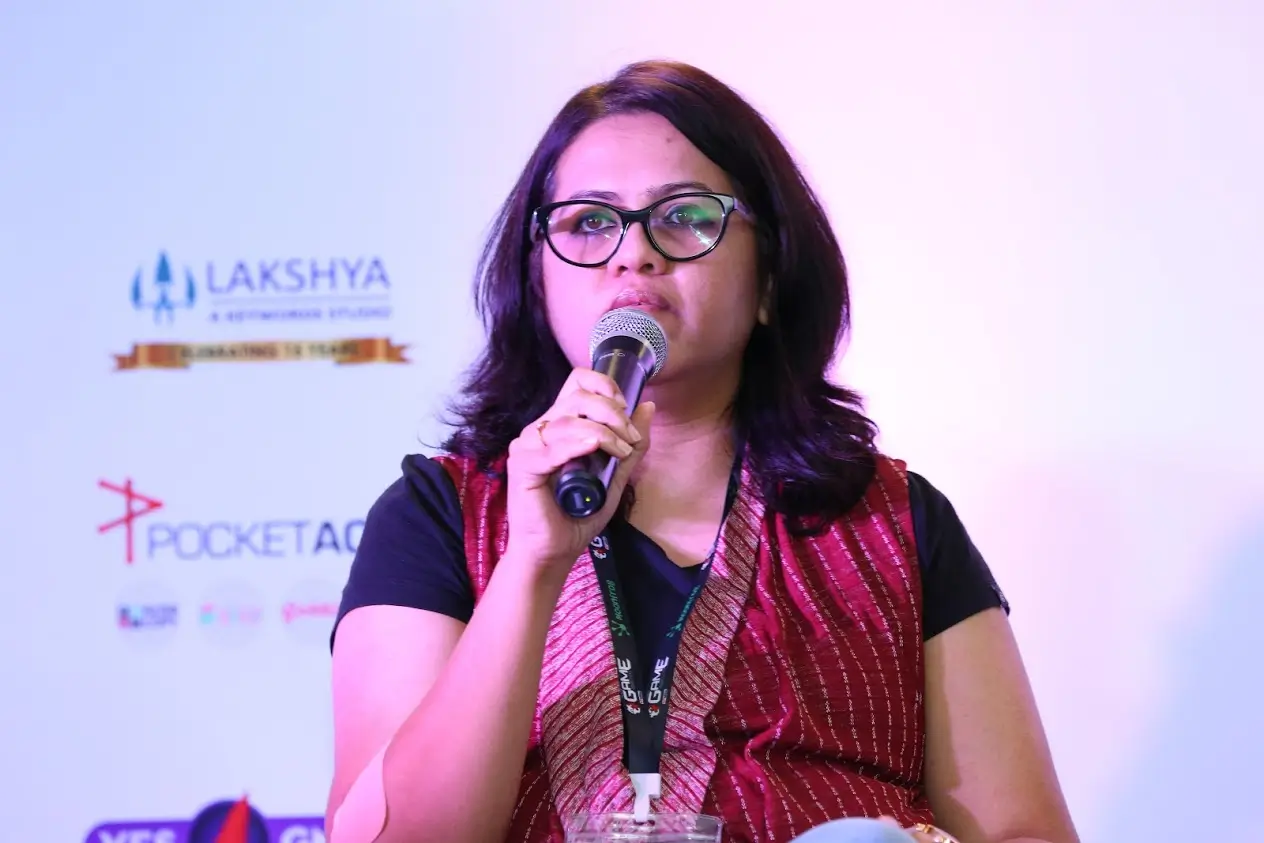
    Bangalore-based Poornima Seetharaman, 36, is the first Indian to be inducted in the Women in Games (WIGJ) Hall of Fame. WIGJ is a not-for-profit organisation promoting a games industry, culture and community free of gender discrimination. The Hall of Fame is considered the ultimate recognition for women in the industry.

    An engineer by training, Poornima joined the gaming industry in 2006 and has since worked on BioShock, FarmVille and How to Train Your Dragon franchises, among other games. She is now the lead game designer at Zynga, a leading developer of social games played by millions around the world.

    Usually reluctant to put herself out there, Poornima nevertheless filed her nomination for the award and was selected among 61 entries. Her accomplishment is likely to put the spotlight on the fast-growing Indian gaming industry. In a conversation over the phone, she shares her journey, the joys of her job and the challenges she faced.

    What are your earliest memories of video games?

    My earliest memories are of Nintendo and Game Boy clones, playing Mario, Duck Hunt and Tetris. My interest in games developed when my parents bought me a PC for academic reasons and my friends introduced me to Age of Empires II and Warcraft III.

    You joined the gaming industry by chance. When did you realise you wanted to make a career in it?

    In college, I used to design Age of Empires campaigns (game scenarios). I enjoyed doing that, but didn’t realise that was a part of game design. I played Zeus, a city-building game that piqued my interest in Greek mythology. It helped me realise that games are not just a pastime—they can teach you things and make you think.

    I started working as a programmer in a gaming company by chance and they had a game design opening. One of my college mates was also working there. He referred me for that role. They gave me one month to make a game design document for a game similar to Neverwinter Nights, but for mobile. They gave me the Dungeons & Dragons manual. I remember going through it and falling in love with game design. It took me back to the kind of fun I had designing campaigns for Age of Empires. That’s how I realised game design and development are my passions.

    How is working in the industry different now compared to when you started?

    It’s much easier to grow now than before. There are more resources to learn things—you can pick up any skill through a YouTube tutorial. Back then, we only had a couple of books and articles. It was largely trial and error. Help was limited to your team or your company. Today, you can reach out to people across the country as well as internationally. It took me 14 years to get where I am, but today, someone good can progress that much in 5-6 years.

    Where do you generally find inspiration for your game designs?

    I find inspiration from a lot of things, but primarily from other games—I play a lot of games. I teach at the National Institute of Design and sometimes even the games that my students make inspire me. Apart from that, movies, mythology and music give me ideas.

    What do you like most about your job?

    I enjoy bringing joy to people with my games. Games are more than just fun. They could be a medium to bond with your family, learn new things, trigger thoughts, share meaningful messages or make a socio-cultural impact. It’s lovely to be able to do all these with games.

    Gamergate (an online harassment and backlash campaign targeting women in the video game industry) highlighted the misogyny in the gaming industry at a global level. Has there been similar harassment of female professionals in India?

    I have faced harassment, although it wasn’t that extreme. That is also because I had amazing colleagues who helped me. But I have heard many horror stories. I have also experienced interview bias. A friend and I interviewed for the same position and the questions we were asked were quite different. Besides, leadership roles usually go to men. I remember once when a new management role had opened up, a guy was selected. When I approached the top brass, they said, “We didn’t know you were interested in that role.” Even though you may be capable and deliver results, it is taken for granted that as a woman, you won’t aspire for a leadership role.

    How is diversity in teams helpful?

    While I could quote many examples, I refrain from answering this question because it implies that women and marginalised groups need to offer something extra to be considered for a job. Why should we bring anything extra as long as we have the same skill set as others? Nobody asks what benefits men bring to the table. Attributes like gender shouldn’t matter as long as someone has the requisite skills.

    Print Version of the Article

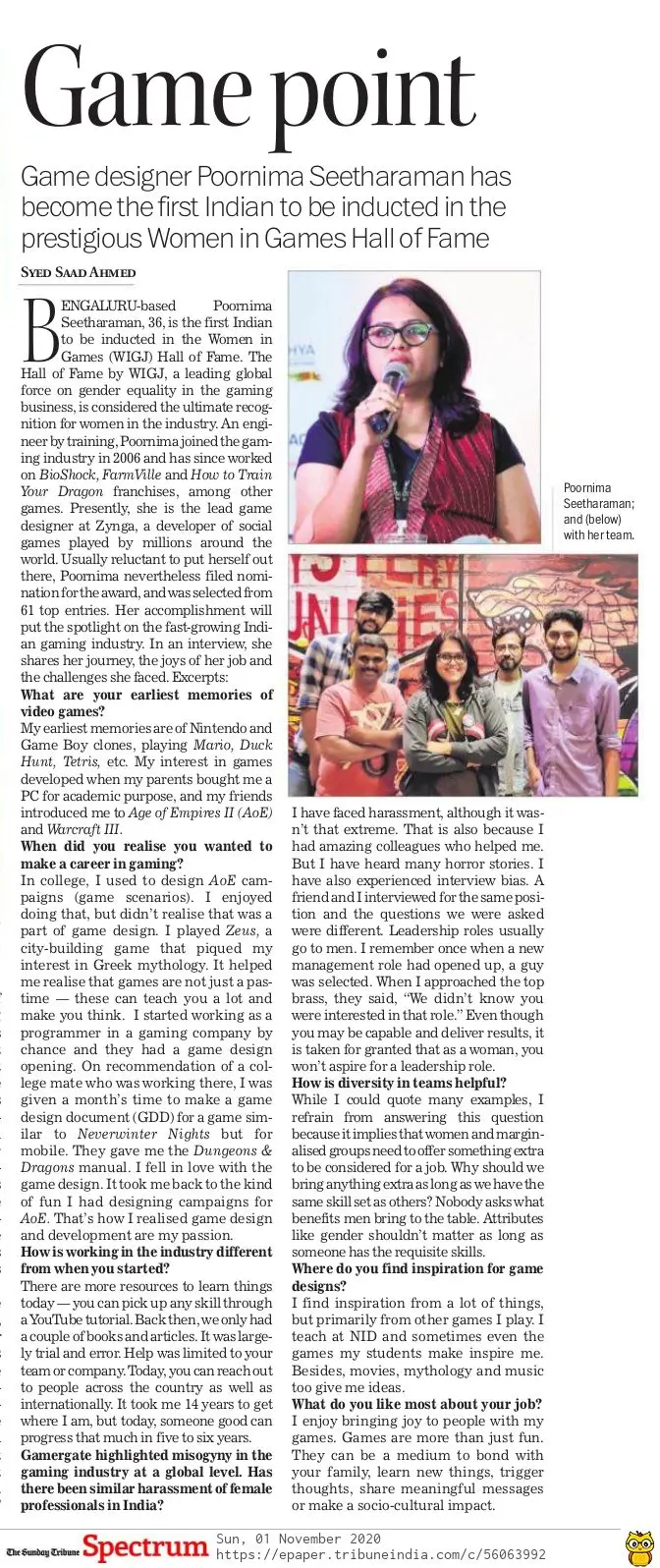
    A screenshot of the article above. The header is "Game Point".
  • ‘Taraash’, a Fascinating Documentary About a Farmer-Filmmaker

    ‘Taraash’, a Fascinating Documentary About a Farmer-Filmmaker

    An edited version of this article featured in Silverscreen India.

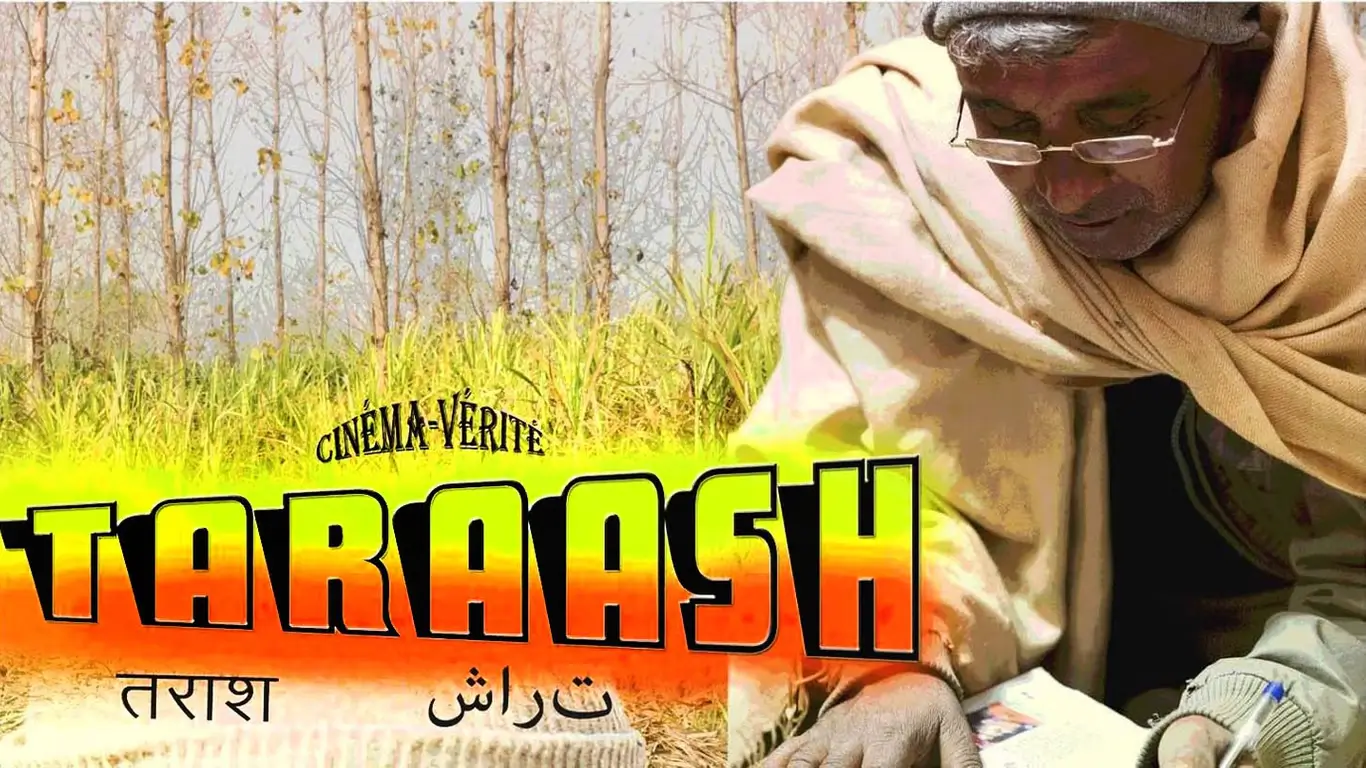
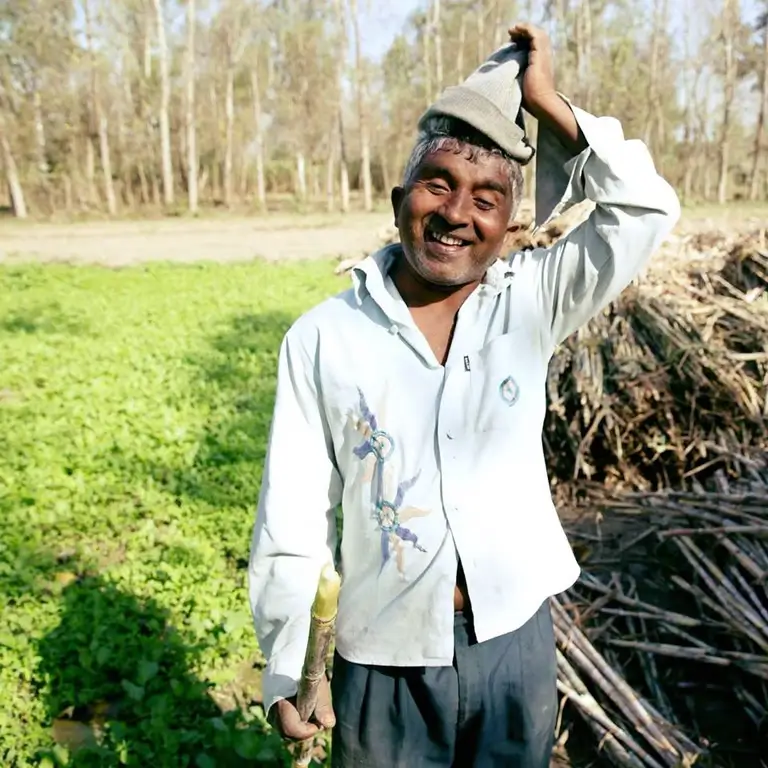
    ‘You’re overacting. Follow my instructions.’ A director telling his actor to shun melodrama might seem commonplace, but Kunwar Pal Singh is a rather unusual filmmaker. In his fifties, the Dalit farmer in Raipur Sadat, a village in Bijnor district, is directing his first film, Maa (Mother). The 13-minute short about the pain of losing one’s mother becomes even more intriguing when you find out that is that it is nestled within a larger documentary, Taraash (2017).

    Kunwar had always wanted to be a Bollywood director and work with his muse, the actress Sridevi, but his modest means and familial responsibilities held him back. It however, didn’t stop the father of six kids from writing six feature-length scripts and many short stories. For decades, people found his passion amusing or downright crazy—even his wife hadn’t read his stories. In 2017, however, his wish finally materialised after a chance encounter with Ishan Siddiqui, then a 20-year-old media student at University of Leeds.

    Kunwar Pal Singh, the farmer who became a filmmaker

    “I was visiting my family in Nagina, my ancestral village,” says Ishan. “I heard about a man in the neighbouring village who wanted to meet me after he found out that I was studying film. As soon as we met, he asked me if I knew any big directors in Bollywood and said, ‘You just take me along, I’ll do the talking…they will love my scripts.’ His determination and confidence inspired me to explore his extraordinary story.”

    Ishan helped Kunwar make Maa and chronicled the collaboration in his 20-minute film Taraash. “I polished his script and adapted it to a short film as Kunwar mainly writes feature-length scripts. I also shared my creative inputs on Maa. During the shoot, he would direct the actors and we would go through the rushes at the end of the day.” While the interviewees and actors in the film were largely locals, he cast three professional actors from Delhi as Maa’s protagonists. The result is a crisp metanarrative weaving fiction and non-fiction that revels in the art and effort of making a film.

    While the crew for both films is the same, the visualisation is different—in Maa, the aspect ratio is wider, the colours starker and the background score more pervasive. Despite the different treatment of the ‘fictional’ and the ‘documentary’, Taraash suddenly intercuts between the two—the fictional mis-en-scene often gives way to the behind the scenes, with the crew, camera and a crowd of onlookers visible in the frame.

    However, it is more than just a film of the ‘making of’ genre. Ishan not only shoots Kunwar shooting Maa, but also Kunwar and the people in the village watching Maa and their reaction to the movie. Jean Rouch pioneered this cinema vérité technique in Chronicle of a Summer (1961). More recently, in The Act of Killing (2012), director Joshua Oppenheimer asked some perpetrators of the 1965-66 anti-Communist massacres in Indonesia to recreate the murders on film and documented their reactions to the videos they shot.

    Raipur Sadat, the village in Bijnor where Kunwar Pal Singh lives

    Ishan acknowledges these directors’ influence: “They taught me the essence of non-fiction filmmaking through collaboration with subjects rather than intervention. I gravitate towards cinema vérité as I enjoy collaboration. As opposed to the ‘fly on the wall’ format [where the crew shoots subjects with minimum interference], I love getting into the thick of things. I also want actors and interviewees to contribute their ideas. For instance, while speaking to Kunwar about Maa, I realised the story was more personal than it initially seemed. I felt like he was using the film to express his feelings towards his mother. So, I wanted him to live his fantasy and share his truth the way he wanted. Sometimes, something as fake as fiction can bring out the true character of a person.”

    Kunwar’s character is what makes the film exceptionally delightful. His earnestness and passion for storytelling suffuses every scene. Despite his age and financial constraints, he has a childlike playfulness. “I can write a story instantly. If you want, I can make one on your cameraman,” he declares to Ishan. “I will set it in London and Delhi…shall I show some romance here or there?” he adds with an impish smile.

    Kunwar is happy with his directorial venture, but he wants more. “If we extend this, it will look amazing,” he says as he watches Maa. Ishan too would have liked Taraash to be feature length, but as a student film, there were many constraints. “As Raipur Sadat is a place with religious significant [the Najaf-e-Hind shrine is nearby], it was difficult to get the permission to shoot and organise screenings. After the local police stopped us from filming, I, along with my cousins, went to the District Magistrate and Senior Superintendent of Police and sought their support,” says Ishan. “The core crew spoke only English, so the Indian crew had to help translate and liaise. Crowd control was also a challenge, but we had the support of village residents and my family members. They helped manage onlookers and avoid chaos.” Taraash was shot over two-and-a-half weeks and funded with a Kickstarter campaign that garnered slightly more than its goal of £4,000 with 66 backers.

    Towards the end of the film, Kunwar says, “As long as I breathe, I will keep writing. This is my dream. One day, I will find a way.” As his passion lights up the screen, one can’t help but wonder how many more Kunwars must be cultivating films in their imaginations and screenplays in their tattered notebooks.

    Taraash was shortlisted for LongShots, BBC’s first online film festival, in 2020.